

My Cart

£175.00
This book is sold by a 3rd party vendor clicking the visit site button will take you to their website
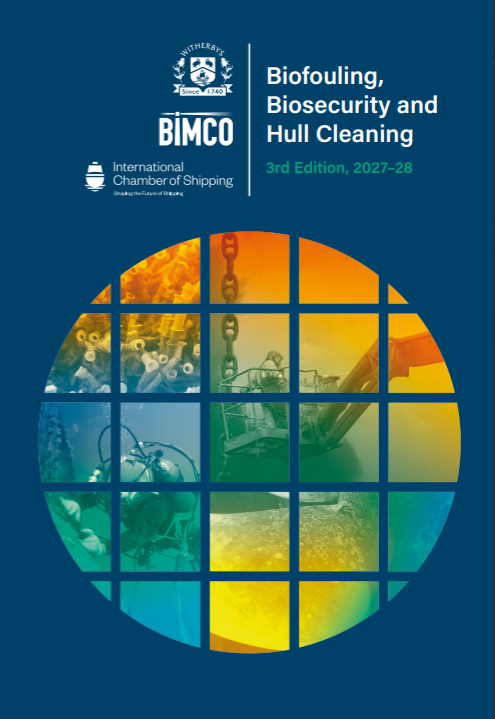
The build-up of biofouling can have a significant impact on ship hydrodynamics and energy efficiency as well as interfere with efficient operation of internal seawater systems. It can also threaten the marine environment through the transfer and establishment of non-native invasive species, or through the use of anti-fouling systems containing certain toxic substances.
The publication sets out current biofouling legislative requirements, including the IMO 2023 Biofouling Guidelines and its importance in the current development of mandatory measures for the control and management of biofouling, updates to the International Convention on the Control of Harmful Anti-fouling Systems on Ships (AFS Convention), and individual national and regional biofouling legislation. It provides templates for the Biofouling Management Plan and the Biofouling Record Book from the 2023 Biofouling Guidelines.
This publication identifies ship structures that are vulnerable to biofouling, factors affecting the rate of build-up and the effect of biofouling on ship performance and operating costs. It looks in detail at biofouling management, including the use of biocidal and non-biocidal paints and coatings, corrosion, marine growth prevention systems, and both in-water and dry dock cleaning. It briefly discusses the importance of environmental research initiatives into the effects of biofouling.
This book has a completely new Ship Biosecurity section for pests that are not transported as biofouling on the wetted surfaces of a ship but can still represent a significant biosecurity threat in certain regions. There is key information on the seasonality, local regulations and reporting requirements, as well as methods of control and management of the Flighted Spongy Moth Complex and the Brown Marmorated Stink Bug.
Finally, this new edition provides an updated selection of data sheets summarising the services offered and area of operation of hull cleaning and inspection companies worldwide. This section includes world maps to enable readers to quickly identify companies operating in particular geographic locations.
| Author | International Chamber of Shipping, BIMCO and Witherbys |
| Publisher | Witherby Publishing Group |
| Edition | Third Edition |
| Publication month | 2026 - October |
| ISBN | 978-1-918766-35-6 |
| Shipping Weight | 1.400Kg |
Part 1 Background Chapter 1 Background 1.1 What is Biofouling? 1.2 The Establishment of Biofouling 1.3 Corrosion 1.3.1 Microbiologically Influenced Corrosion (MIC) 1.4 Cathodic Protection (CP) 1.4.1 Sacrificial anode cathodic protection (SACP) 1.4.2 Impressed current cathodic protection (ICCP) 1.4.3 Marine Growth Protection System 1.5 Invasive Species Part 2 Biofouling Legislation and Guidelines Chapter 2 The 2023 Biofouling Guidelines 2.1 The 2023 ‘Guidelines for the Control and Management of Ships’ Biofouling To Minimize the Transfer of Invasive Aquatic Species’ (2023 Biofouling Guidelines) 2.2 Design and Construction 2.3 Anti-fouling Systems (AFS) 2.4 Niche Areas 2.5 In-water Operations: Inspection, Cleaning and Maintenance 2.5.1 In-water Inspection 2.5.2 In-water Cleaning and Maintenance 2.6 The Biofouling Management Plan and Record Book 2.6.1 The Biofouling Management Plan (BFMP) 2.6.2 The Biofouling Record Book (BFRB) 2.6.3 Training and Education Chapter 3 Regulations for the Control of Anti-fouling Systems (AFS) 3.1 The International Convention on the Control of Harmful Anti-fouling Systems on Ships (AFS Convention) Chapter 4 National and Regional Biofouling Requirements 4.1 Australia 4.1.1 The Australia ‘Biosecurity Act 2015’ 4.1.2 The ‘Australian anti-fouling and in-water cleaning guidelines’ (2024) 4.2 New Zealand 4.2.1 The ‘Craft Risk Management Standard (CRMS) for Vessels (2023)’ 4.2.2 Places of First Arrival (PoFA) 4.2.3 Specific Requirements (Short-Stay, Long-Stay and Cruise) 4.2.4 Pre-Arrival Documentation/Information 4.2.5 Biofouling Inspections 4.2.6 Non-compliance and Penalties 4.3 United States of America 4.3.1 Federal Law 4.4 Individual US State Biofouling Requirements 4.4.1 California 4.4.2 Hawaii 4.4.3 Maine 4.4.4 Washington 4.5 Polar Waters 4.6 Belgium 4.7 United Kingdom 4.8 Norway 4.8.1 The Best Available Technology 4.8.2 Exemptions 4.9 Brazil 4.9.1 The Port of Santos 4.10 Further National and Regional Fouling Management Requirements 4.11 Ships Affected by National Regulations Part 3 Biofouling and the Ship Chapter 5 Ship as a Carrier 5.1 Biofouling Assessment 5.2 Areas of Attachment on a Ship 5.3 Newbuild Design to Minimise Biofouling 5.4 Operational Profile and Maintenance of the Ship/Marine Structure 5.4.1 Type of Ship and its Charter Profile 5.4.2 Operating in Different Environments 5.5 Marine Structures/Devices Chapter 6 Biofouling and Ship Performance 6.1 Effect of Biofouling on Ship Hydrodynamics and Energy Efficiency 6.1.1 IMO Measures and Guidance for Energy Efficiency 6.1.2 ISO Standards 6.2 Biofouling Cost Effects Chapter 7 Biofouling, Biosecurity and Research 7.1 The Effects of Biofouling on the Marine Environment 7.1.1 The Effects of Biofouling Control and Removal 7.2 Environmental Research Initiatives 7.2.1 The GloFouling Partnership Project 7.2.2 The TEST Biofouling Project Part 4 Biofouling Management Chapter 8 Anti-fouling Systems (AFS) 8.1 Biocidal Paints and Coatings 8.1.1 Ablative or Soluble Matrix Coatings 8.1.2 Contact Leaching 8.1.3 Self-polishing Copolymer (SPC) 8.2 Non-biocidal and Hybrid AFS 8.2.1 Foul Release Coatings (FRC) 8.2.2 Hard Inert Coatings 8.3 Marine Growth Prevention Systems (MGPS) 8.3.1 Anodic Copper Systems 8.3.2 Aluminium and Iron Anodes 8.3.3 Electrochlorination 8.3.4 Direct Chemical Dosing 8.3.5 Ultrasound 8.3.6 MGPS Maintenance 8.3.7 Periods of Ship Inactivity 8.4 Selecting an AFS/AFC 8.5 Application of AFS/AFC 8.5.1 Applying AFS/AFC to Specific Niche Areas 8.5.2 Proper Application of AFC |