

My Cart

£325.00
This book is sold by a 3rd party vendor clicking the visit site button will take you to their website
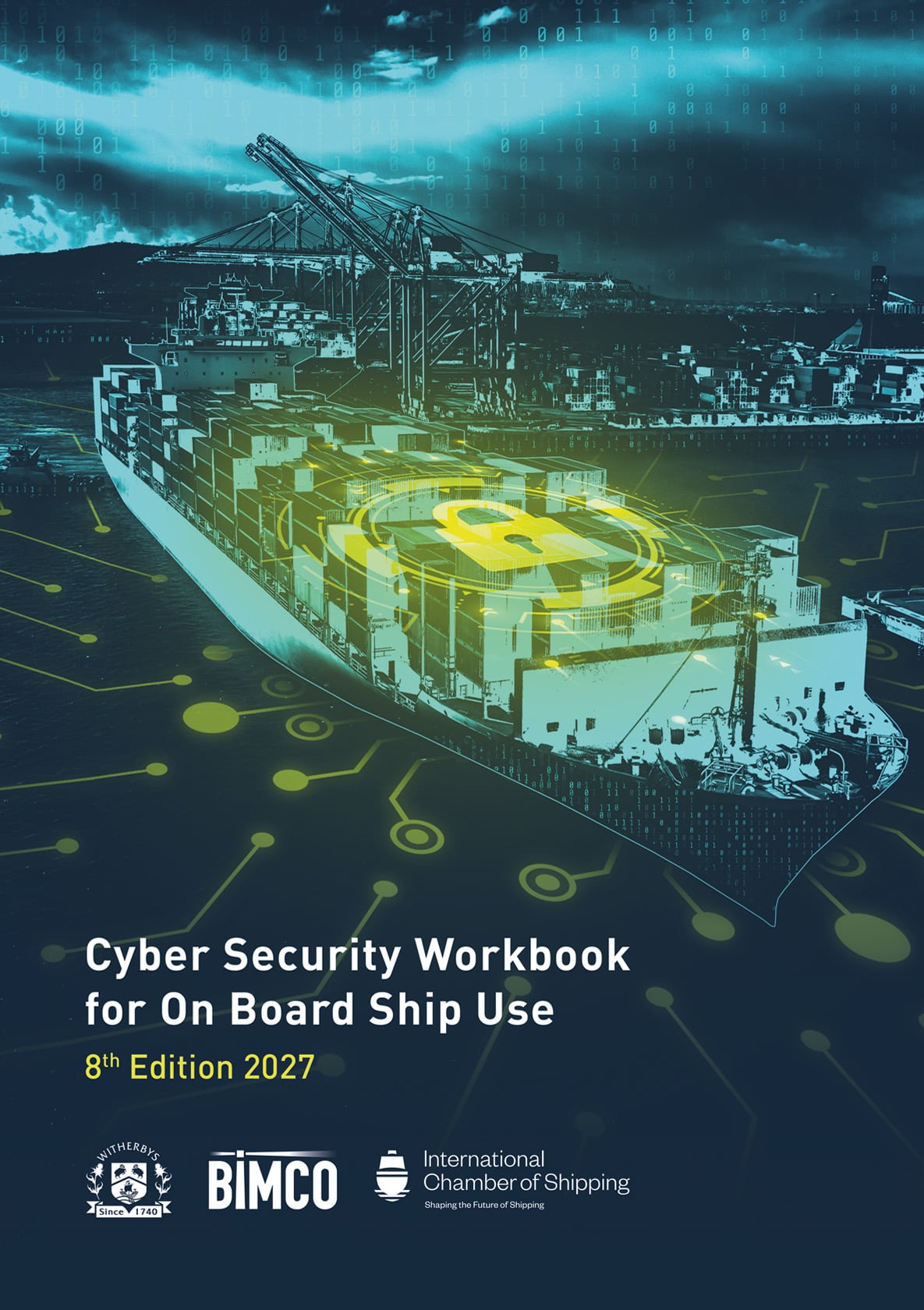
Cyber risk management should be an inherent part of safety and security and should be considered at all levels of the company, including senior management ashore and onboard personnel.
This Workbook has been designed as a practical, straightforward guide to support the Master and officers on board ship (Part I – Onboard Practical Considerations). It is designed to facilitate understanding and good collaboration between individual ships, onshore IT departments and equipment manufacturers (Part II – Shore Management Considerations). The Workbook may also be useful to the wider maritime industry.
The 8th Edition has been produced by Witherbys, BIMCO and the International Chamber of Shipping (ICS). The Workbook has been fully revised and updated and contains new guidance on:
Detailed case studies and diagrams have been added to help illustrate cyber risks. The Workbook contains 13 Checklists and 6 Annexes, including Cyber Security Risk Assessment and Creating a Cyber Security Plan.
| Author | International Chamber of Shipping, BIMCO and Witherbys |
| Publisher | Witherby Publishing Group |
| Edition | Eighth Edition |
| Publication month | 2026 - October |
| ISBN | 1918766282 |
| Shipping Weight | 1.300Kg |
Foreword Abbreviations/Definitions Introduction Section 1 - Regulations and Guidance 1.1 IMO Requirements 1.1.1 Designated Roles and Responsibilities 1.2 ‘The Guidelines on Cyber Security Onboard Ships’ 1.3 Additional Industry Guidelines 1.3.1 International Association of Classification Societies (IACS) 1.3.2 Non-governmental Organisations (NGOs) 1.4 Regional Regulatory Guidance 1.4.1 UK 1.4.2 EU 1.4.3 USA 1.5 Guidance on Mitigation Strategies for IT 1.5.1 Essential Eight Maturity Model 1.5.2 Cyber Essentials 1.5.3 IMO Insider Threat Toolkit Part One - Onboard Practical Considerations Section 2 - Identifying Risks 2.1 Vulnerable Ship Systems 2.2 What is a Maritime Cyber Attack? 2.3 Phases of a Cyber Attack 2.4 Threats 2.5 Types of Cyber Attack 2.6 Social Engineering 2.6.1 Tailgating 2.6.2 Email Phishing 2.6.3 Spear Phishing 2.6.4 Man-in-the-middle (MITM) Attacks 2.6.5 Phone or Text Messages 2.6.6 QR Code Phishing 2.6.7 Multi-factor Authentication (MFA) Phishing 2.7 Ransomware 2.8 Use of Artificial Intelligence 2.8.1 Significant AI Developments in 2026 2.8.2 Automated Network Reconnaissance 2.8.3 Advanced Evasion and Bypassing Defences 2.8.4 Precision Targeting and Process Manipulation 2.8.5 AI-enhanced Social Engineering 2.8.6 AI Used as a Defensive Tool |
Cyber attacks on shipping are escalating at an alarming pace and are exposing a threat the international maritime community cannot afford to ignore. Each year, vessels grow more sophisticated and closely connected to networks ashore. While this connectivity brings real operational and welfare benefits, such as connecting seafarers more reliably with companies and families at home, it also gives attackers more chances to cause harm. A single cyber attack can cut a whole fleet off from shore communication. A systems breach at a port can expose reams of sensitive operational data. The potential for serious disruptions to global trade underscores how essential vigilant cyber security is to shipping. The advent of artificial intelligence (AI) makes this threat graver still. Generative AI tools give attackers the ability to automate reconnaissance and repackage malware at a speed and scale that manual methods cannot match. Simultaneously, GNSS spoofing and jamming are a daily hazard in some of the world’s busiest waters. It is deeply concerning that seafarers must now navigate with the knowledge that the very signals guiding their vessels may not be reliable. However, the growing awareness of this threat and our industry’s ability to counter it is encouraging. The IMO’s ‘Guidelines on Maritime Cyber Risk Management’, most recently revised in 2025, continue to anchor cyber risk within safety management systems. European Union and the United States regulators also give this obligation greater force by strengthening cyber security obligations across industry stakeholders. Together with updated cyber security standards from Classification Societies and insurers, these measures have brought cyber resilience into the regulatory and commercial mainstream. As those who wish to disrupt the safe movement of ships continue to sharpen their methods, the industry must keep pace through rigorous risk assessment and sustained training. This Workbook aims to serve as a trusted companion to seafarers and shore-based colleagues alike, helping them understand this threat and safeguard maritime trade for the benefit of all nations. Thomas A. Kazakos Secretary General International Chamber of Shipping |