
My Cart

£195.00
This book is sold by a 3rd party vendor clicking the visit site button will take you to their website
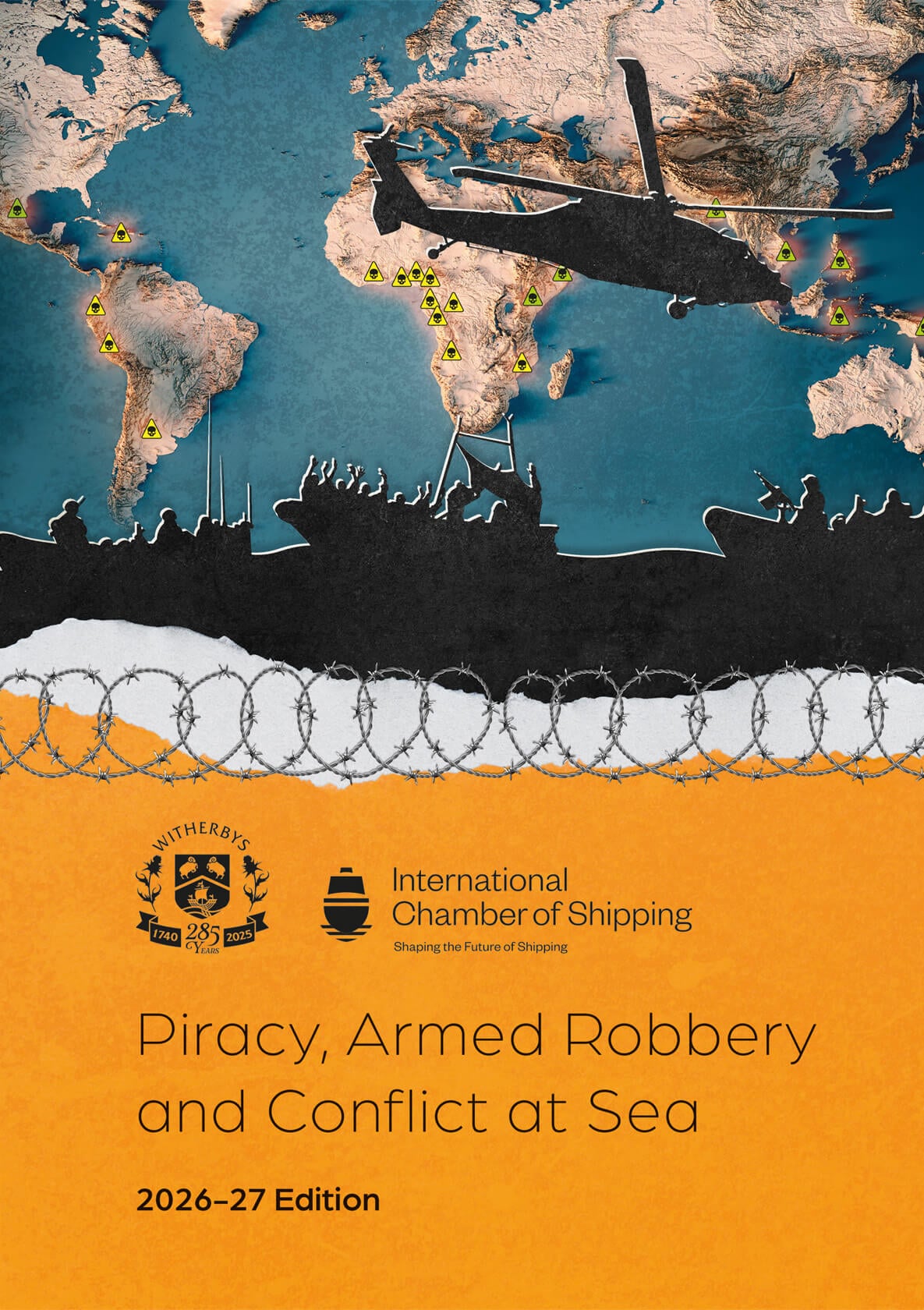
The Guide provides a comprehensive overview of the measures seafarers should take to protect against, prevent, respond to and recover from an incident of piracy, armed robbery or conflict at sea.
Current threat profiles and up-to-date guidance are outlined, including the latest international and regional regulatory guidance to aid seafarers in understanding the complexities of security challenges at sea and for each individual voyage. This new edition features updated piracy statistics and case studies, expanded coverage of maritime terrorism and warzones/warlike areas and new subsections on GNSS/AIS jamming and spoofing.
The second edition details the security measures needed on board to protect against attacks as well as how to create and implement a successful ship security plan, as required by the ISPS Code. It includes a brand new section on security measures in ports and the latest updates on cyber security and associated training. International and national cooperation sections have been revised with new material covering United Nations, NATO, ASEAN and SAARC Conventions among others.
Advice for navigation and passage planning in areas of high risk is also given alongside details of training programmes that should be in place for crew and onshore staff. The response section has been updated with new case studies of CBRN and WBIED attacks along with new content on decontamination incident management.
This Guide also provides step-by-step advice to be followed in the event of an attack on board including ship damage mitigation measures, medical considerations, guidance for hostage situations and preparation and response to missile, mine and drone attacks. It also outlines considerations for the ship management team, such as responding to ransom requests and media management and communication.
Annexes provided include updated reporting forms and reference checklists for each stage of an incident (protect, prevent, respond and recover), as well as revised bridge cards summarising key information and risk areas.
| Author | International Chamber of Shipping and Witherbys |
| Publisher | Witherby Publishing Group |
| Edition | 2026-2027 Edition |
| Publication month | 2026 - January |
| ISBN | 978-1-918144-05-5 |
| Shipping Weight | 1.200Kg |
Part A - Preparation - Understanding the Security Challenges Section 1 The Threat to Ships Section 2 Regions, Areas and Trends Section 3 Industry Guidance Part B - Protection Section 4 Security Measures On Board Section 5 Security Measures in Ports Section 6 Navigation and Operations in Areas of Piracy, Armed Robbery and Conflict, including Terrorist Activity Section 7 Other Security Measures Part C - Prevention Section 8 International and National Cooperation Section 9 Training and Education Part D - Response Section 10 Initial Response to an Attack On Board Section 11 Ongoing Incident Management On Board Section 12 Post-incident Response Annexes Annex A Reporting Forms and Contact Information Annex B Checklists
|
The global nature of merchant shipping and trade means that ships are at risk of travelling through waters exposed to piracy, armed robbery, terrorism and warfare. The risk that ships and their crews may be either the direct target or the unintended victims of violence, both at sea and in port, is something that must be considered during every voyage and be appropriately mitigated against. While piracy has decreased in recent years, thanks to international cooperation and the presence of effective naval patrols, the risk remains in some regions of the world. The high risk area (HRA) in the Gulf of Aden was officially removed in January 2023, but attacks and hijackings are still a possibility in these waters and so the voluntary reporting area (VRA) remains in effect. The Gulf of Guinea is still a hotspot for crew kidnappings, and incidents of armed robbery and piracy continue in some South American and Asian areas. Attacks on shipping in the Red Sea, instability in the Gulf of Aden and the Strait of Hormuz and the conflict in Ukraine present further challenges for ships and crew operating in these regions, including diverted shipping routes, closed ports and the risk of drifting sea mines. This guide supersedes the previous ICS publication 'Pirates and Armed Robbers: Guidelines on Prevention for Masters and Ship Security Officers', first published in 1986, and is a companion to the ICS guide 'Maritime Security: A Comprehensive Guide for Shipowners, Seafarers and Administrations'. This new 2025-2026 Edition now covers maritime terrorism in more depth, in addition to piracy, armed robbery and conflict at sea. It provides essential, practical guidance for ship owners and operators and for ships' crews on how best to protect their ships, as well as how to respond to and recover from incidents. Topics covered include recent trends and areas of high risk, passage planning, guidelines on the creation and use of the citadel, physical mitigation measures and incident response for both on board and ashore. Information about reporting schemes, naval patrols and the latest regulatory advice is also provided to give ships and their crew all the guidance they need to transit dangerous waters safely.
|