Anders Østergaard: Key performance innovators – an unconventional journey to rapid growth
Monjasa Group CEO Anders Østergaard speaks to ICS Leadership Insights about his unconventional approach to success, the challenges facing alternative fuels adoption and the possibility of a nuclear-powered future.
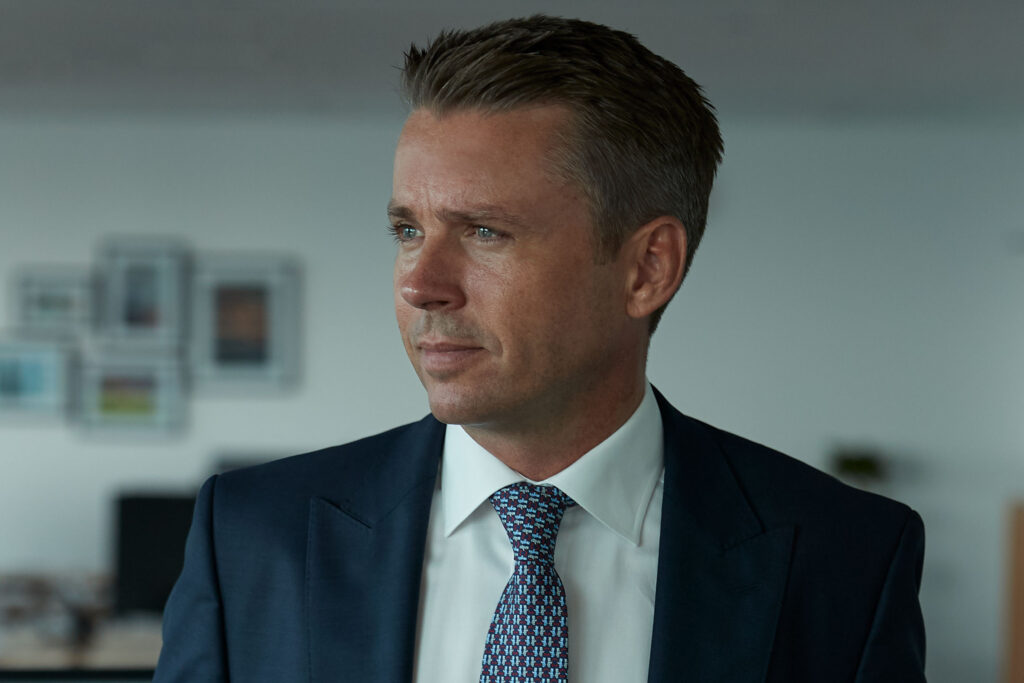
Q. You’ve managed to build the world’s seventh largest bunker business within 20 years. What business decisions and strategies enabled you to achieve this success?
A. It’s been a case of considering every decision in a rounded way – one of Monjasa’s core values is curiosity, which is something I apply to everything I do. I’ll never pretend that I’m certain about a decision before I’ve fully evaluated the situation. I think that’s ultimately a way of operating that reflects who I am and part of what it means to be an entrepreneur – gain all the information you can but also be bold and trust your gut.
Q. Unusually, you achieved this success without tying yourself to specific performance KPIs. How did you arrive at this approach and how has it shaped the company’s growth?
A. It’s possible that we’ve been fairly novel here, although it’s important to note that we do set budgets that we look at year-on-year to benchmark how we’re performing. So we do have overall KPIs, which is ultimately our budget that enables us to do quarterly, half-year and annual reporting.
However, if we consider how we run the company in terms of strategy, then we’re not tied to KPIs. Now, more than ever, with the world so volatile, an old-fashioned approach to setting strategy won’t work. Rather than thinking in terms of KPIs, we focus on the extent to which we are making a difference through the strength of our core business – which everyone at the company is very clear on.
Q. You are also the co-founder and secretary general of the Emirates Shipping Association, formerly known as the UAE Shipping Association before its recent rebrand. Can you tell us about your vision for the organisation?
A. Our overall goal is to create one maritime voice – just as the ICS does globally – in a way that benefits the country and the industry. We’re achieving this with a range of committees that are supporting policy development – such as around the new global tonnage tax schemes.
Equally, we’re promoting the UAE flag – we have an important role to play in seeing more ships hoisting the UAE flag across the entire merchant global fleet.
We’re also committed to developing the UAE’s shipping youth of tomorrow and educating young people on the opportunities offered by the industry
Q. What type of alternative fuels are shipping companies focusing on at present? And how is Monjasa establishing a pipeline of alternative fuels?
A. Recognising the MEPC process, it’s clear that our industry faces real challenges in navigating the low-carbon transition. More than ever, we recognise that we don’t yet have all the answers. Historically, shipping’s progress has always been shaped by economic reality – the free market has guided each major transformation, from sail to coal to oil.
Today, the situation is different. Alternative fuels such as LNG, ammonia, and methanol currently carry a noticeable price premium compared to traditional fuels. Their large-scale adoption will likely depend on two parallel forces: regulatory frameworks that create incentives for change, and the natural evolution of the market itself. LNG, for example, could become significantly more viable as global supply continues to expand.
While the outlook remains uncertain amid today’s volatile world, I remain optimistic. Ultimately, I believe the most sustainable and enduring progress will come through the dynamics of the free market – through innovation, competition and the natural economic evolution that has always steered our industry forward.
Q. Do you have any concerns around meeting future demand for these future fuels given the investment in infrastructure that will be required and the fact that other industries and governments will be vying for the same fuels?
A. This is likely to be a challenge – the fact that alternative fuels don’t currently represent an economically viable option means there hasn’t been strong demand, which in turn causes a relatively low level of investment.
Collectively, we’re not set up for large-scale global ammonia and LNG bunkering, given that the storage requirement for these is -33 degrees and -162 degrees centigrade respectively.
The same is true of methanol, even if the temperature isn’t the main challenge – the bigger issue is that the pricing is much higher than traditional fuels – so I think it’s going to remain a challenge to meet future demand at a global level.
Q. You’ve mentioned a few pros and cons of the different fuels – do you have a view on which alternative fuel is most likely to succeed in the future?
A. I definitely feel like LNG is the clear winner in the short term as it has a competitive advantage in terms of price over methanol and ammonia.
I’d also say methanol is likely to be the number two option as it has simpler logistics in terms of storage temperature and the fact that ammonia has a very high level of toxicity. Longer term, I think the industry is likely to ultimately conclude that methanol is the easier product to deal with.
Q. How has the shipping industry responded to geopolitical tensions, especially in the Red Sea?
A. The global shipping industry has time and time again proven itself to be resilient against major geopolitical challenges. This is because no matter the situation, the demand for goods is still there and shipping has always played a very important role in stepping up to ensure that world trade continues. Today, despite the ongoing conflicts in different parts of the world, it is no different.
Q. Are there any broader trends or goals for the Middle East that you believe will shape the future?
A. The Middle East will continue to play a very pivotal part in global trade due to the large volume of oil located in the region. There is also a lot of LNG and gas in the area, with production currently scaling up to meet future demand.
There has also been significant investment in nuclear power, so the region is one to watch when it comes to alternative forms of energy.
If we look a lot further into the future – far enough that I probably won’t be around to see it – nuclear power will likely be the overall winner. This would mean the end of bunkering, which would no longer be necessary as nuclear power could provide vessels with endless energy.


