


Fire Drill Guidelines for Vehicle Carrying Vessels
These guidelines have been designed to provide a structured framework for the development and conduct of fire response drills on board vehicle carrying vessels.
International Chamber of Shipping develops and promotes shipping industry best practices and guidance through a wide range of publications and free resources that are used by ship operators globally.
You can download most publications from the list below for free and purchase the paid-for publications from the ICS Publications site.
Showing 1 – 10 of 259 results
These guidelines have been designed to provide a structured framework for the development and conduct of fire response drills on board vehicle carrying vessels.
This fully illustrated publication describes in detail the problems that biofouling can cause to ship operations and the marine environment. It examines the use of anti-fouling systems to prevent the build-up of biofouling as well as the options available for ship cleaning, in particular the importance of in-water cleaning. It also sets out the revised 2023 IMO Biofouling Guidelines, specific regional mandatory biofouling requirements and the mandatory IMO AFS Convention. It also provides data sheets on a number of hull cleaning companies worldwide.
This practical and easy to understand workbook supports the owner, master and the ship's crew with cyber security risk management. It contains comprehensive checklists to support the day-to-day management of onboard cyber security and facilitates collaboration between ships, onshore IT departments and equipment manufacturers.
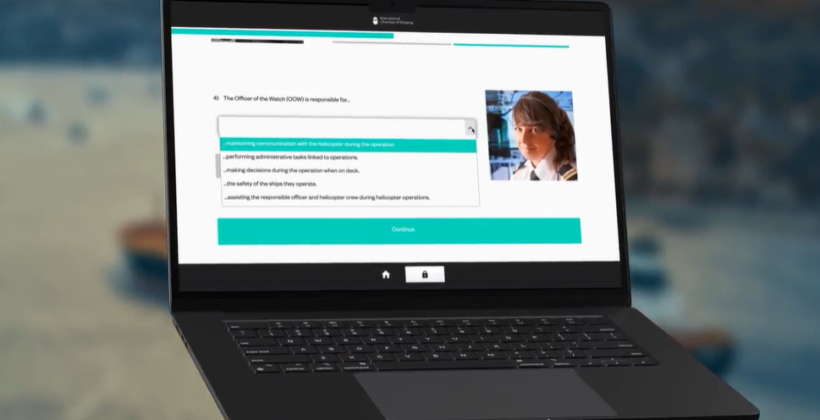
This video to walk-through video shows the interactive and engaging experience designed for ICS Academy learners.
By explaining the relationship between shipping and the environment, this guide helps crew and shoreside staff understand not only what environmental requirements are in place but why these regulations matter.
Global trade, energy security, food supply, and crisis resilience depend highly on shipping. About 90% of world trade is transported by sea, supported by a workforce of over 2.5 million seafarers on up to 74,000 vessels. Without shipping, national economies and societies cannot function, let alone thrive. Seafarers are key workers who underpin national prosperity and global stability by facilitating the movement of over 12 billion tons of cargo and well over 30 million ocean-going passengers annually. Yet their role remains largely invisible in political decision-making outside maritime ministries.
Extracted from the full Seafarer Workforce Report 2026, this Executive Summary provides the key findings of the global seafarer workforce supply and demand situation.
The 2025-2026 ICS Maritime Barometer Report is the latest full scale annual survey of risk, confidence, and impacts among maritime leaders.
Today, at the International Chamber of Shipping’s Annual General Meeting, John Denholm CBE was elected as the new Chairman of ICS. This video explains who John his and what his vision is for ICS.
The objective of this report is to identify and analyse key areas where the HKC and the EU SSR diverge. To do this, the report examines the legal texts of both frameworks, together with the corresponding IMO and EU guidelines and secondary legislation. Several recommendations to narrow the gaps between the frameworks are also given. The national implementations of the EU SRR and HKC as well as guidelines from other bodies such as the ILO are out of scope of this report.