A safe harbour for decarbonisation
As a key strategic location in the heart of the Mediterranean, Malta plays a crucial role in global shipping. Dr Chris Bonett, Minister for Transport, Infrastructure, and Public Works, and Dr Miriam Dalli, Minister for Environment and Energy, spoke with ICS Leadership Insights to outline how the island nation is playing a leading role in driving the Mediterranean’s transition into a clean energy hub.
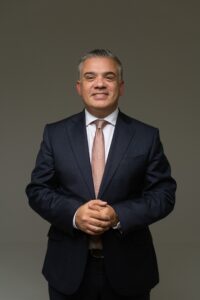
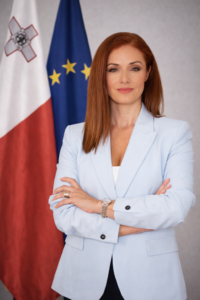
Q: As the industry enters a period of accelerated decarbonisation, how do you see Malta’s strategic role evolving over the next decade?
Minister Chris Bonett: “The first and most important thing we’re doing is giving confidence to the sector that we intend to remain leaders in decarbonisation. We do that by investing and committing to infrastructure. There has been a lot of discussion on onshore power supply (OPS), and we’ve already finished the first phase for two liners. We are in the process of finishing another OPS very soon for cargo ships coming into our terminals, including the Grand Harbour. Our ports need to be ready, so when decisions are made about fuel types and how ships stay in port, Malta is prepared.
“We are currently in the process of launching the public consultation for the National Maritime Transport Strategy, which involves aligning all our policies – transport, environment, economy – to make sure that over the next 25 years, Malta has a maritime industry that keeps on working.”
Minister Miriam Dalli: “Malta’s strength in the shipping industry is not only geographical but also based on our consistent engagement with the maritime sector, adherence to international standards, and quality of service. In this transition to decarbonisation, Malta aims to be a partner to the shipping industry, helping not just nationally or regionally but also internationally. Given our history and reputation, we are well positioned to support the sector.”
Q: With growing momentum around clean energy, marine hubs, and green shipping corridors, how is Malta positioning itself and what practical steps are being taken to ensure competitiveness as fuel pathways diversify?
Minister Chris Bonett: “Malta has already taken practical steps. Shore-to-ship OPS infrastructure, for example, is one of the first such projects in the Mediterranean. This investment shows shipowners that we are getting ready. Future competitiveness will depend on which ports provide access to varied types of fuel. Infrastructure readiness attracts traffic – once supply is available, the ships will come.”
Minister Miriam Dalli: “Malta has been at the forefront of coordinating the MED9 countries to agree on promoting the Mediterranean as a clean energy hub. We are assessing how our port and energy systems can support green shipping corridors progressively, allowing infrastructure and safety frameworks to develop alongside technology and market demand. We are also exploring the development of Clean Energy Marine (CEM) Hubs, not only as bunkering solutions, but as integrated ecosystems that bring together infrastructure, regulation, and innovation in one place. We are also monitoring trade routes in Asia-Pacific and other regions to ensure Malta remains competitive.”
Q: What is Malta’s roadmap for developing bunkering, storage, and fuel capabilities, including LNG, methanol, hydrogen, and ammonia?
Minister Miriam Dalli: “We always keep the decarbonisation of the shipping sector in step with our wider energy systems. Malta is a small island state, so safety and spatial considerations are central to our decisions. For example, we already have experience handling LNG, which currently provides around 70% of our electricity. This experience has helped us build solid operational and regulatory frameworks.
“Regarding alternative fuels: LNG is near-term, methanol has growing international interest, while hydrogen and ammonia are longer-term prospects. Affordability is also key – as a small island state, any increase in shipping costs ultimately affects our consumers.”
Minister Chris Bonett: “It’s difficult to give definitive answers right now because of uncertainty, but our focus is on being ready for all eventualities. Infrastructure investment itself is a signal to shipowners. OPS, digitalisation of the shipping register, Freeport Terminal expansion – these all tell shipowners: invest, because when you come here, you’ll find what you need.”
Q: With stringent environmental regulations emerging at EU and IMO levels, how is Malta balancing compliance, competitiveness, and operational realism for shipowners under its flag?
Minister Chris Bonett: “Applying regional rules to a global industry creates problems. That’s why we support the IMO’s Net-Zero Framework. It’s not perfect, but it applies equally to all countries.
“There is a misconception that the industry doesn’t want to decarbonise – that’s wrong. If we listen to the industry and work within carbonisation boundaries, we can create a framework that serves everyone. Malta’s flag is successful because shipowners feel valued. It’s not just a skill issue – it’s efficiency, responsiveness, and a ‘can-do’ attitude.”
Minister Miriam Dalli: “Regional initiatives alone will not reduce emissions effectively. For example, the EU ETS risks creating carbon leakage, with ships bypassing EU ports to nearby North African ports. The only effective solution is global, aligned frameworks. Southern EU states like Malta, Italy, Greece, and Cyprus have consistently voiced these concerns.”
Q: How are Malta’s energy and maritime ministries coordinating to ensure alignment of energy policy with maritime needs?
Minister Miriam Dalli: “Our grid is being strengthened to support shore-to-ship infrastructure, and we’re increasing renewable capacity and electricity supply for ports. LNG bunkering is being assessed using our energy sector experience.”
Minister Chris Bonett: “Infrastructure projects in the maritime sector only proceed once energy supply and infrastructure are aligned. Policy alignment happens continuously across ministries through initiatives like the National Maritime Transport Strategy. This ensures that shipping, energy, and environmental goals are mutually supportive.”
Q: How is Malta strengthening its resilience, both in terms of energy security and its maritime value proposition?
Minister Miriam Dalli: “As a small island state, we cannot rely on one source, one route, or one supplier. That is why we do not focus only on interconnections. We do not rely only on LNG either. We look at diversification of supply, including long-term contracts where appropriate, because stability gives security.
“We are also increasing our share of renewables and strengthening our electricity network. Energy security for Malta is about resilience – having multiple sources, including home-grown ones, and ensuring that our systems can withstand geopolitical shocks.”
Minister Chris Bonett: “Notwithstanding what geopolitics can do, Malta must remain a safe harbour and a place where business can be done. We are investing in infrastructure, in digitalisation, and in port efficiency so that shipping lines know Malta is reliable. When trade routes shift, as we are seeing in Asia-Pacific and elsewhere, our objective is to ensure that new routes complement existing ones rather than bypass them. Our role is to remain strategically positioned and operationally ready.”
Q: Where do you see the greatest opportunity for digital transformation in Malta’s maritime ecosystem?
Minister Chris Bonett: “This year we began digitalising the shipping register, which was long overdue. The response from industry has been extremely positive because it increases efficiency. Instead of paper certificates moving around the world and sometimes getting lost, everything becomes faster and more reliable.
“The greatest opportunity is in how vessels communicate with ports and how ports operate internally. Smart technologies allow ships to reduce waiting times, optimise port calls, and operate more efficiently.”
Minister Miriam Dalli: “Digital transformation must also be aligned with energy systems. As we strengthen our grid and integrate shore-to-ship power, digital management of energy flows becomes essential. Smart systems help us manage demand, especially when a single ship may require up to 10 megawatts while berthed. Digitalisation therefore supports both efficiency and decarbonisation.”


