Scaling ship management in a more complex world
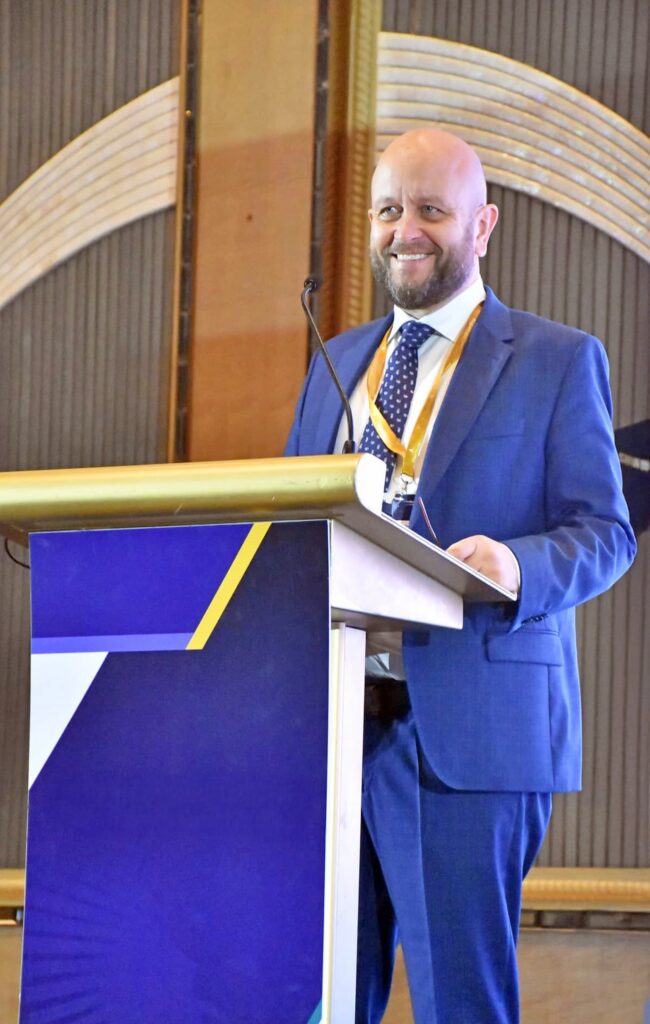
Q1. You were recently appointed Group Managing Director of OSM Thome. What excites you most about leading the company into its next phase, and what are your immediate priorities?
What excites me most is how the company continues to evolve. OSM Thome started as a founder-led business, and today we have a strong board and management structure.
That gives us a solid platform for the future. Ship management is fundamentally about competence, systems, experience, and, above all, people. Our goal is to scale that in a disciplined way and build operations that perform consistently.
A key priority is delivering on what makes us different. We are one of the few ship managers that employ their own seafarers. That connection to our people is what builds trust and performance.
Ultimately, we succeed only if our customers succeed. At the end of the day, everything we do needs to support that.
Q2. How do you plan to build on the company’s current momentum?
Growth comes in two ways. The first is organic, when new vessels enter the market as new ships are delivered or ownership changes.
The second is through acquisitions. Operating ships has become more complex, with growing regulatory and reporting requirements. Smaller operators often struggle to keep up. Larger platforms like ours can handle that complexity better and more efficiently. That creates opportunities to integrate smaller management platforms or in-house operations. We’ve done that successfully, and we will continue where it strengthens our capabilities. We remain open to further opportunities, particularly where they strengthen our capabilities or open new markets.
Q3. What role does cultural alignment play when considering potential acquisitions?
Culture and values are fundamental. Any organisation joining us needs to share our commitment to transparency, safety, and operational standards. That’s non-negotiable.
We also look at what unique strengths a partner brings, whether that’s expertise in a vessel segment or access to new crewing markets.
Ultimately, acquisitions should strengthen what we already do well.
Q4. Which global regions do you see as the most promising growth markets for ship management in the coming years?
Asia remains a key market. We are also looking closely at Africa, where we see a growing pool of well-educated talent entering the maritime workforce.
At the same time, traditional centres are evolving. While ship ownership remains strong in places like Greece, seafaring is gradually shifting towards emerging markets.
The Middle East is another key region, particularly as Dubai continues to grow as a trading hub, though geopolitical developments need to be followed closely.
Q5. You have been a strong advocate for seafarers throughout your career. How has your own background at sea shaped your leadership approach?
I still see myself as a seafarer at heart. I understand the demands of spending months away from family in challenging environments. You don’t forget what it takes.
Leadership in ship management is unique. You are responsible for large, rotating teams where leadership constantly changes, yet performance must remain consistent.
You need to stay close to the operation. Shipping is a people business. It’s about listening, staying connected, and supporting people where they are.
Q6. What steps do you believe the industry must take to improve seafarer welfare, retention, and long-term career development?
We need to look at the industry through the eyes of the seafarer. People stay when they feel respected, trusted, and part of something bigger. When shore organisations treat crews as partners, performance improves. Close engagement is essential, whether through office interaction, ship visits, or open dialogue.
Many improvements come down to common sense: treating people with dignity and understanding their reality.
Q7. The industry is also navigating the green transition. How do ship managers balance commercial realities with environmental requirements, such as retrofitting vessels and adopting alternative fuels?
It starts with regulation and a level playing field. Clear standards enable innovation. Improving efficiency benefits both cost and emissions. That’s just good business. Many retrofits focus on reducing fuel consumption and improving performance.
We also focus on performance monitoring, working with partners, and ensuring seafarers are trained and confident with new technologies. That combination is what moves us forward.
Q8. There is still debate over which alternative fuels will dominate in the long term. How do you see this developing?
It’s still too early to say which fuel will dominate. LNG is a transitional option, and alternatives like ammonia and methanol are being explored.
There are also longer-term discussions around solutions such as nuclear propulsion. Our focus is on building the competence to safely manage vessels across different technologies.
Q9. Geopolitical uncertainty has become a major factor for the maritime sector. What challenges and opportunities do you see emerging over the next five years?
The biggest concern and the number one priority is the safety of seafarers. It is unacceptable that crews are exposed to unsafe conditions. Geopolitics also affects regulation, taxation, and trade, adding complexity to operations.
At the same time, a global presence creates resilience. It allows us to adapt quickly and continue operating effectively. Choosing the right partners is also critical in this environment.
Q10. Looking back over your career, what continues to motivate you as a leader in the maritime industry?
People. Shipping creates livelihoods for thousands around the world. That’s what drives me. Growth means creating more opportunities and better careers.
I also want to see seafarers recognised as critical workers. Finally, it’s about building bridges between sea and shore, so people can build a career over time in shipping that can last a lifetime.


