Navigating crisis through transparency and trust
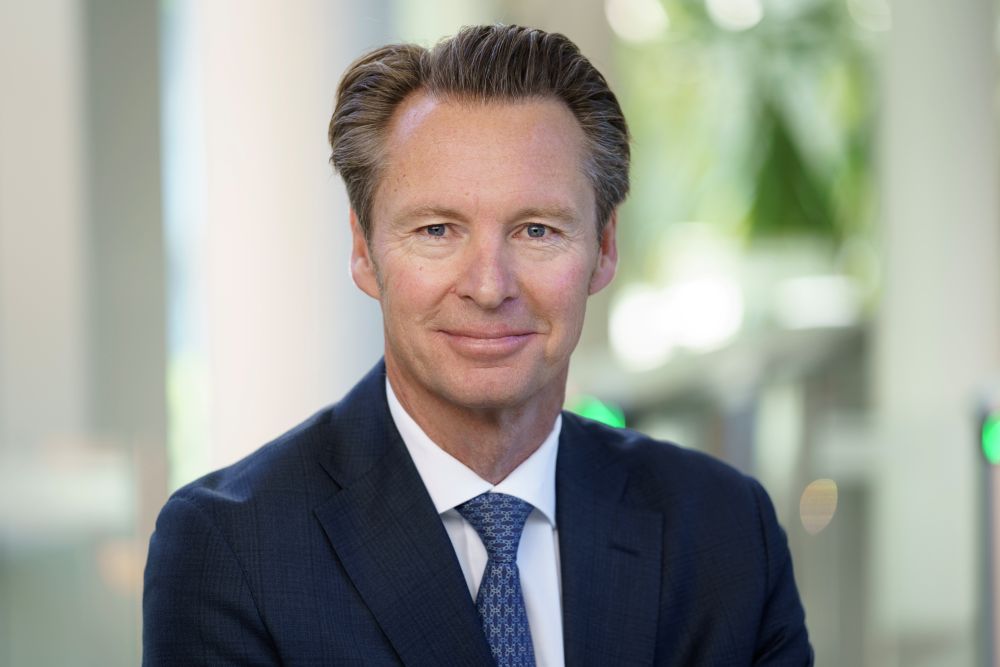
Knut Ørbeck-Nilssen, Group President and CEO of DNV, sits down with ICS Leadership Insights this month to discuss topics from good leadership in times of uncertainty, to the importance of trust in maritime and progress in the industry’s energy transition.
Q. You’ve spent more than three decades in shipping, from surveyor to one of the industry’s most recognised leaders. When you look back, what experiences do you think have shaped your leadership style more than anything else?
Looking back, the experiences that shaped me most were the ones that kept me close to the realities of shipping. Starting as a surveyor gave me a first-hand understanding of the people, operations, and decisions that keep our industry moving.
As my career progressed, working with customers, colleagues, and stakeholders around the world taught me that leadership is less about having all the answers and more about asking the right questions, listening, building trust, and helping people navigate uncertainty.
The periods of greatest change have probably been the most influential. Whether dealing with geopolitical shocks, market downturns, regulatory shifts, or the challenge of decarbonisation, I learned that trust becomes your most important asset. These periods reinforced the importance of being both optimistic and realistic, providing clear direction while being honest about challenges.
I like to think that those experiences shaped a leadership style rooted in technical competence, curiosity, pragmatism, and respect for people. In the end, leadership is about earning trust and enabling others to succeed.
Q. As a leader who has navigated structural industry shifts and major crises, what core, non-negotiable principles do you rely on most when the path ahead isn’t clear?
Over the years, I’ve learned that uncertainty is something you learn to navigate. Shipping has always been cyclical and constantly evolving, and if you spend enough time in this industry, you experience everything from market downturns and geopolitical disruption to major technological and regulatory shifts.
I rely on a few principles: stay grounded in facts, be honest about what you know and don’t know, manage your input sources and listen to people with different perspectives, and keep a long-term view of where you’re heading.
I’ve also learned the importance of pragmatism. You rarely have perfect information, particularly in an industry going through significant change.
The key is to consider optionality, make decisions, adapt when needed, and keep moving forward while staying true to your values.
Q. You frequently emphasise the importance of trust in maritime operations. Do you believe trust is earned primarily through technical competence, deep industry relationships, or the decisions made when things don’t go to plan?
Trust is built over time, and it comes from a combination of factors. Expert competence is essential. People need confidence that your decisions and advice are grounded in expertise. Strong relationships matter too, because trust grows through consistent delivery and open dialogue.
But if I had to choose, I would say trust is truly tested when things don’t go according to plan. Anyone can build confidence when circumstances are favourable. The real measure is how you respond to setbacks, uncertainty, or difficult decisions.
I’ve found that people don’t expect perfection. They expect honesty, accountability, and a willingness to take responsibility. When you demonstrate those qualities, trust tends to grow stronger. In that sense, trust is built through competence and relationships, but it’s often earned through actions when the heat is on.
Q. DNV’s latest Maritime Forecast to 2050 points to massive dual-fuel engine orderbooks, yet actual low-GHG fuel consumption remains stubbornly low. Are owners spending billions on dual-fuel assets that will be forced to burn conventional fossil fuels for years to come?
Not necessarily. The strong uptake of dual-fuel vessels reflects the fact that owners are making long-term investment decisions in an environment where the future fuel mix remains uncertain.
The reality is that the availability of low-GHG fuels is not yet available at scale and at a competitive price.
That is a challenge, and our latest Maritime Forecast to 2050 highlights this gap. Investing in dual-fuel capability today gives owners flexibility to transition as fuel availability and affordability improves and regulations tighten. We should view these vessels as transition-ready assets.
The critical next step is accelerating the production, distribution, and bunkering infrastructure needed to make low-GHG fuels available at scale, and at costs that are competitive with conventional fuels.
Of course, some vessels, such as those in tramp shipping, will continue to rely heavily on conventional fuels. However, these vessels will also gain by improving energy efficiency and thus reducing fuel consumption.
Q. Two years ago, you noted the energy transition was gathering rapid momentum, but you recently warned that shipping has “very little chance” of making the IMO’s 2030 targets. What went wrong across the industry in the last 24 months?
I wouldn’t say something has gone wrong. In many ways, we’ve seen significant progress.
Shipowners are investing in more efficient vessels, new technologies, and fuel flexibility, despite considerable uncertainty in regulations, and future fuel availability and costs.
The challenge is that the transition depends on more than shipowners’ willingness to invest. The availability of low-GHG fuels and the supporting infrastructure have not developed at the pace needed to meet the IMO’s 2030 ambitions.
So, this is less a story of lost momentum and more a reminder of the scale of the challenge. The industry has taken important steps forward, but decarbonisation requires coordinated action across the entire value chain, supported by IMO member states establishing sound global regulations that create a level playing field and provide the certainty needed to accelerate investment.
I remain optimistic about the direction of travel. But we also need to be realistic about where we are today and what it will take to reach the destination.
Q. How do you respond to critics who argue that battery weight, degradation, and fire safety risks mean batteries will never be viable for long-haul merchant shipping?
I would be cautious about making definitive statements about any technology. Batteries are already proving their value in several maritime applications, particularly in short-sea shipping, ferries, and hybrid solutions.
For deep-sea shipping, the challenges are well known. Energy density, weight, charging infrastructure, and safety considerations mean batteries alone are unlikely to be the answer for many long-haul vessels in the foreseeable future.
But that doesn’t mean batteries don’t have an important role to play. The energy transition will not be driven by a single technology or fuel. Different vessel types and trades will require different solutions, and batteries are likely to remain an important part of the mix, particularly when combined with other technologies.
The key is to remain technology-optimistic and focus on finding the solutions that are safe, practical, and capable of delivering meaningful emissions reductions. That has always been the industry’s strength.


