Championing unity in a changing tide
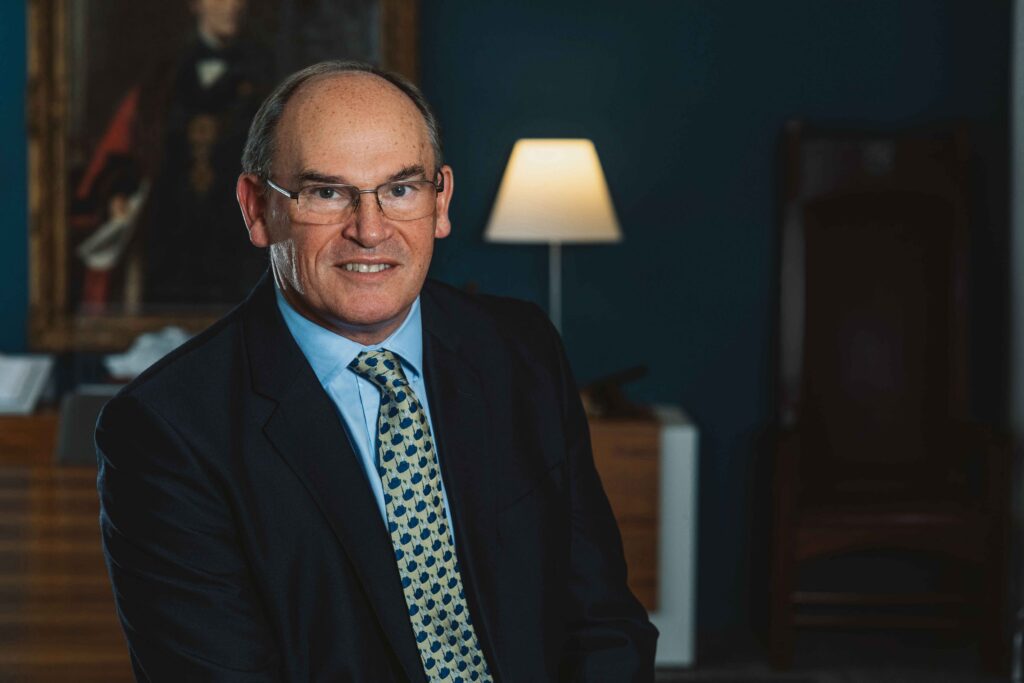
This month, the International Chamber of Shipping welcomes its new Chairman, John Denholm CBE. He speaks with ICS Leadership Insights to discuss his main priorities, important shifts in the maritime industry, decarbonisation, and attracting the next generation of seafarers.
Q. You are stepping into the role of Chairman at a time of significant change across global maritime trade. What feels most important to get right in your early priorities?
My priority is achieving a better consensus and helping the industry speak with a unified voice. Too often in shipping, we focus on the small areas where we disagree rather than the much larger areas where we agree.
I see my role as a coordinator, helping bring different perspectives together so that governments hear a common industry position. ICS has a strong track record of doing this. Decarbonisation is a good example: 15 years ago, there was little agreement on what the industry should do. Today, however, there is a broad consensus that global action is needed, even if the negotiations at IMO are currently proving to be very challenging. That ability to listen, refine ideas, and build support around practical solutions remains one of ICS’s greatest strengths.
Q. When you look at the maritime sector today, what are the most important long-term shifts that leaders need to be paying attention to right now?
One of the major immediate concerns is driven by events in the Middle East. First and foremost is the safety of seafarers, who once again find themselves exposed to risks created by geopolitical conflict.
Alongside that is freedom of navigation. It is a fundamental principle on which global shipping depends, yet it is often taken for granted until it comes under pressure.
In the long term, climate change remains the biggest influence on shipping. That is not only about decarbonising our own operations but also understanding how global decarbonisation will reshape trade flows. At the same time, we are operating in a more unstable geopolitical environment than we have seen for many years. In that context, the importance of the IMO and a rules-based international system cannot be overstated.
Q. Much of the industry conversation focuses on decarbonisation. Where do you see the most meaningful progress being made in practice?
I believe the liner companies will lead much of the early progress. They operate fixed trade routes and can arrange fuel supplies around those routes. They are also closer to consumer pressure, which creates additional incentives to decarbonise.
What we are already seeing is investment in new fuels by operators who can plan with confidence. Once fuel becomes available at major hubs and trade corridors, it becomes much easier for other parts of the industry to follow.
The fuels attracting most attention today are those that are available and practical. LNG and biofuels can play an important role in the transition, but they are unlikely to be the final answer. They are steps on the journey. The challenge remains finding scalable long-term solutions that genuinely support net-zero ambitions.
Q. Equally, what aspects of the transition do you think are still underestimating the complexity involved?
Fuel availability remains the biggest challenge. There is little incentive to invest in new vessels if owners cannot be confident that fuel will be available where they need it. It is the classic chicken-and-egg problem.
Economic incentives are also important. Ideally, those incentives should come through a global framework developed by the IMO. If that does not happen, we will continue to see regional schemes emerge, creating greater complexity for international shipping.
The targets we have set ourselves are ambitious, but ambition is important. If we achieve most of the journey towards net-zero by 2050, that would still represent an enormous achievement. The industry also needs a positive mindset. Rather than asking whether something can be done, we should be asking how we can do it safely and effectively.
Q. Leadership in shipping has traditionally been shaped by cycles and external shocks. Do you think that model of leadership is still sufficient for what the industry now faces?
Cycles and shocks have always been powerful drivers of change because they force industries to question established ways of working. Many of the efficiency gains and operational improvements we take for granted today emerged because people were challenged to think differently.
Climate change is another example, although it differs from many previous shocks because it is developing gradually rather than arriving suddenly.
That said, leadership cannot simply be reactive. The industry also needs people willing to introduce new ideas, technologies, and approaches before circumstances force change. External shocks may accelerate progress, but positive leadership should help drive it as well.
Q. How important is collaboration across the maritime ecosystem – owners, operators, ports and technology providers – in shaping the next phase of change?
It is absolutely essential. Decarbonisation cannot be delivered by one part of the value chain acting alone.
There is little point in a shipowner investing in alternative-fuel vessels if ports are unable to support those fuels or if cargo owners are unwilling to support the additional costs involved. Every part of the system needs to move together.
I think we will see more long-term partnerships, charter arrangements, and supply agreements as a result. Those relationships create the certainty needed for investment and are ultimately what meaningful collaboration looks like in practice.
Q. Talent is a recurring theme across the industry. From your perspective, what needs to change to make maritime more attractive to the next generation?
Shipping offers an extraordinarily attractive career. Few professions give young people the opportunity to take responsibility for valuable assets, lead teams, and see the world at such an early stage of their careers.
The challenge is not that the career lacks appeal. The challenge is that we do not market it effectively enough, particularly in Western Europe.
In countries such as India and the Philippines, maritime careers are often seen as highly aspirational. We need to do a better job of communicating the opportunities available, whether at sea or ashore. The industry is also becoming increasingly technical, which should make it even more attractive to future generations with strong engineering and technology interests.
Q. Technology, particularly AI and advanced data systems, is increasingly being discussed as a driver of efficiency and decision-making in shipping. Where do you see it already making a tangible difference today, and where is the industry still overestimating its impact?
AI already has significant practical applications. It is helping companies analyse data, improve efficiency, optimise fuel consumption, and identify maintenance issues before they become serious problems.
Looking ahead, I expect AI to become a much more integrated operational tool, including on the bridge. However, I do not believe we are heading towards fleets of entirely crewless ships. Technology will support decision-making, but human judgment will remain critical.
Like many technologies before it, AI will change how people work rather than simply replacing them. The greatest benefits are likely to come from combining advanced systems with skilled seafarers rather than choosing one over the other.
Q. As you look ahead in your role as Chairman, what would you want your contribution to the sector to be remembered for?
Experience has taught me that shipping rarely unfolds exactly as expected. When I was at BIMCO, I thought much of my time would be spent on decarbonisation, but piracy became a major focus. At the UK Chamber of Shipping, Covid reshaped priorities in ways nobody anticipated.
Whatever challenges emerge during my time as Chairman, I hope ICS will be remembered for helping the industry navigate them positively and constructively.
Above all, I always come back to seafarers. Without seafarers, we have no industry. Their safety, welfare, and fair treatment must remain at the centre of everything we do. If we can continue to champion their interests while helping the industry navigate change, that would be a contribution worth being remembered for.


