Sustaining success
The Lloyd’s Open Form (LOF) guides the remuneration awarded to salvors for saving property at sea. Updates to the LOF in 2024 introduce new levels of transparency, with a view to spotlighting the industry’s environmental and safety contribution.
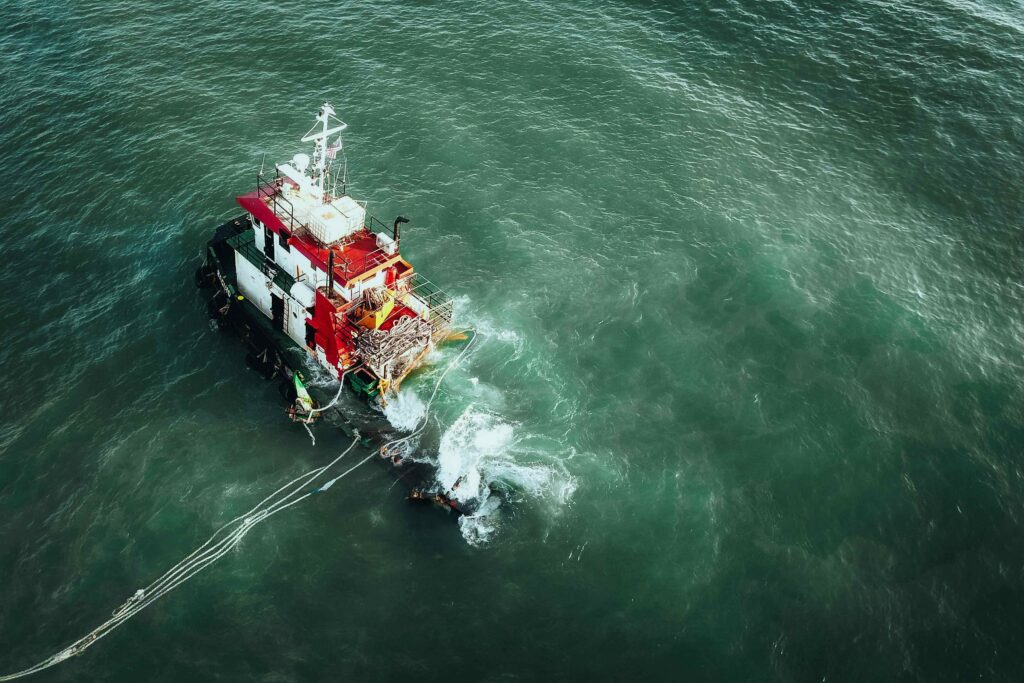
The Lloyd’s Open Form (LOF) has been in use since 1908, when it was established to provide a framework for determining the remuneration to be awarded to salvors for their services in saving property at sea and minimising or preventing environmental damage.
However, in recent years, it was announced that Lloyd’s was considering turning the form off altogether, prompting a rallying round from the industry with regards to its importance.
In recognition of this, the Lloyd’s Salvage Arbitration Branch (LSAB) instead launched the LOF 2024, the 13th edition, building on the LOF’s longstanding success, which can be partially attributed to its ability to evolve and adapt.
The updated LOF introduces a number of new clauses, with the most notable a requirement to share previously confidential settlement data with Lloyds, alongside the introduction of a new Fast Track Documents Only (FTDO) procedure, which aims to speed up the number of claims that can be heard and applies to “all arbitrations where the security demand is US$10m or less”.
Placing social value in the spotlight
The new data-sharing rules require data to be provided within 60 days of services being completed and includes ESG data, such as details of oil, chemicals and hazardous substances salved and the potential impact averted. Additionally, the value of salved property and the settlement paid, as well as how this was apportioned between interested parties, must be shared.
This disclosure will be kept confidential by Lloyds with the intention of publishing an aggregated and anonymised version of the information annually.
By offering greater transparency, ensuring there is a bank of awards or settlements available, this data sharing update aims to encourage even more users of the contract, while enabling underwriters to understand risk levels.
It will also enhance the reputation of the salvage industry and the LOF, according to Nicky Cariglia, founder of Marittima, which offers bespoke sustainability consultancy and emergency response for maritime. Speaking to ICS Leadership Insights, she says: “One of the important considerations for the 2024 update is how to demonstrate the importance of the salvage industry and the role of the LOF without drowning businesses in red tape. These recent updates will demonstrate the pollution saved and hazardous materials prevented from entering the environment, while speeding up the process by which costs are claimed.”
This view is echoed by David Lawrence, Head of Global Marine Services & Broker Oversight at Lloyd’s, who explains that collecting sustainability data will prove an important aspect of demonstrating the social value of the salvage industry and LOF. Speaking to ICS Leadership Insights, he says: “LOF allows for the immediate response that is crucial when it comes to saving lives, mitigating environmental impact, and saving property, in that order of importance.
“The 2024 LOF update, which requires the sharing of data relevant to this, will bring appropriate focus to the social importance of the industry, including both the financial and societal costs, if prompt intervention from salvors had not been possible and (further) waste had been allowed to spill. Gathering this data should allow the financial level of LOF awards to be viewed in their proper context.”
Such a move could be viewed as necessary given that there has historically been a view among some in the industry that the LOF is too expensive for insurers, even prompting an article exploring who killed LOF back in 2017. Speaking to ICS Leadership Insights, Stephen Wood, Director at marine salvage consultancy Archimedean, notes that the “LOF has had a bad reputation in the ship owning community for being expensive” but also notes this might not be entirely fair, pointing out that no one would “question the cost…of the fire brigade”.
Henk Smith, Director at salvage consultancy Marine Masters, echoes the view that the LOF is viewed as expensive. Speaking to ICS Leadership Insights, he notes: “The LOF is sometimes viewed by the insurance industry as a blank cheque.” Despite this, he also points out that it is a “contract that allows salvors to quickly begin working on the preservation of property and the environment, which can take longer under a commercial contract”.
Efficiency and transparency with FTDO
The FTDO procedure aims to ensure a greater volume of cases can be heard, with all cases under $10m going through the fast-track system by default unless an interested party convinces an arbitrator that a document only approach is unsuitable.
As with data sharing, the introduction of FTDO could also improve transparency in a way that benefits the industry, according to Lawrence. “The introduction of FTDO means there is a record of decisions that is available so that people can understand what’s been agreed and the rationale. That’s also important for underwriters who gain a better understanding of risk levels and their reserves given the likely results of future cases.”
The LOF future
Given the recent updates to LOF, there are no immediate plans to introduce further changes before gaining clarity on how the 2024 updates are working in practice, explains Lawrence.
“We need to embed the 2024 updates and review how effectively they are supporting the industry. These were introduced after a period of significant consultation so we’re confident they will deliver positive results, but we’re also adaptable on an ongoing basis, which is why LOF has stood the test of time. We’re committed to continuing to work with the industry to ensure LOF is the most suitable and beneficial salvage contract when a vessel is in distress.”
One of the aspects of the LOF that has seen change though is the new Default Clause, which was launched by ICS and the Lloyd’s Market Association (LMA), following over a year’s consultation with underwriters, owners, Lloyd’s and other interested parties.
This new clause for incorporation in marine hull policies ensures that in the event of an emergency, it is clear that the master and or owners can proceed to use the LOF to obtain salvage services without delay, and also sets out a process for owners to notify hull underwriters and take their views as to the appropriate contract to be used in such circumstances (whether LOF or some other contract).
This clause aims to address the concerns that have led to the decline in the LOF’s use and restore confidence in this vital contract, ensuring that it remains a cornerstone of maritime safety for years to come.


