Arsenio Dominguez: Bridging over the divides
Leadership Insights newsletter story
A year into his role as Secretary-General of the International Maritime Organization (IMO), Arsenio Dominguez discusses progress on his key goals and challenges in an increasingly complex shipping landscape.
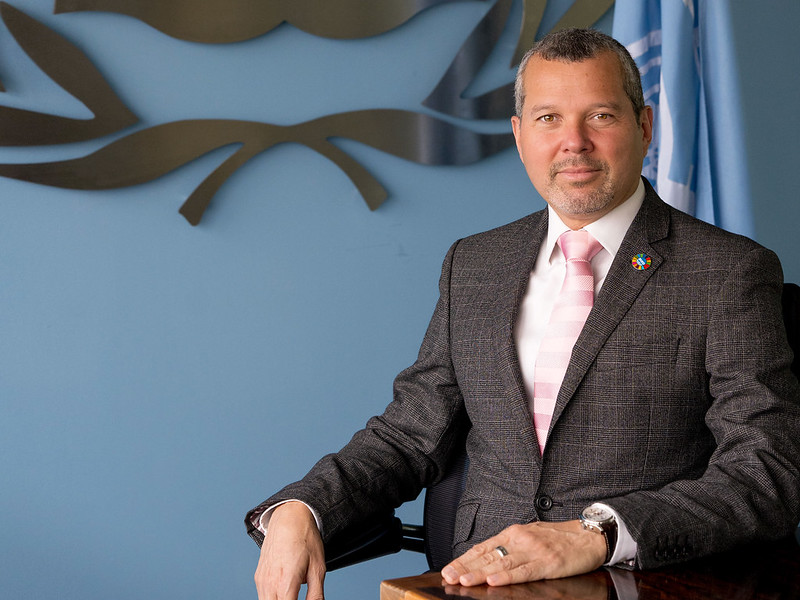
Q. A year into your role as IMO Secretary-General, what have been your biggest successes so far?
A. We have increased engagement within the industry, across stakeholders and beyond, to help achieve change. This includes important goals such as increased safety, as well as supporting each other in the face of geopolitical challenges.
The safety and wellbeing of seafarers continues to be one of my top priorities. ICS has been very engaged with us alongside other organisations and governments, particularly in seafarers’ cases involving criminalisation and abandonment. We must protect and invest in people, which ultimately will also help attract and retain workers.
Underpinning this, one of my main objectives has been to get IMO and shipping more into the mainstream media. We have overcome many challenges, from COVID-19 to inflation and more recent geopolitical instability, yet we normally only make headlines when something goes wrong. The mainstream media interviews I’ve engaged in are helping to create a new communication platform whilst educating the wider public more on what we do, why shipping is indispensable, and why we need their support.
Q. What are some of the key challenges you see coming up in 2025?
A. One of the main challenges is security. This is particularly important given the ongoing geopolitical instability in areas such as the Red Sea and Black Sea. Although we have been very effective in fighting piracy in the Gulf of Guinea and the Gulf of Aden, there are other parts of the world where we’ve seen an increase in piracy, and our number one ambition remains to completely eradicate piracy.
Another challenge is around new environmental protection measures. Our theme in 2025 is ‘Our Ocean – Our Obligation – Our Opportunity’, which highlights how IMO has and will continue to protect the marine environment. For example, since the adoption of the MARPOL Convention in 1973, we have introduced an array of regulations to reduce ship-sourced pollution, including air pollution.
Moreover, IMO also adopted measures to reduce plastic pollution from ships. This was done ahead of many governments and regulators who are still in the process of addressing this issue. We are also currently looking at measures to reduce underwater radiated noise from shipping.
Q. With some key outstanding debates yet to be resolved, notably on a global GHG emissions pricing mechanism and a marine fuel standard, how hopeful are you that the mid-term GHG measures will be adopted at the upcoming MEPC sessions in 2025?
I remain optimistic that we are going to make good progress. Even just over a year ago, when we adopted the 2023 strategy, there were ongoing geopolitical challenges, but IMO has demonstrated time and time again that we can put differences aside and come together to address shared concerns and achieve common goals.
This year, we are holding a number of intersessional meetings, including a workshop to consider food security and the potential impact of the measures on States. The final step of adoption is due to take place in October 2025, so we have built in a hefty timeframe to give room to fully consider any issues and find common ground.
Q. In light of greater political divisions and global conflict, what is the impact on Flag State jurisdiction and the role of IMO?
A. Greater divisions and conflicts do not shift the way that Flag States or IMO functions: IMO measures must be fully implemented by Flag States and these measures exist to guarantee that the ships are safe and secure, that the environment is safe and protected, and that the people are properly trained.
Geopolitics do bring an additional challenge, but we have to put differences aside and work together. We have a crucial global responsibility to ensure that we remain resilient and continue to transport essential goods to everyone globally, despite the challenges.
Q. 2024 was a major election year for many countries. Do you expect trends such as nearshoring, and friendshoring to continue or increase and what impact will this have on shipping and shipping routes?
A. The role of IMO, as well as the whole UN system, stays the same – highlighting the importance of multilateralism is one of our core objectives. It is pertinent to reiterate that shipping is a global industry, and as such, the role of IMO as the specialised agency responsible for the safety and security of shipping on clean oceans, is as relevant as ever.
Q. You noted in your previous interview with ICS Leadership Insights that you hoped to enact DEI initiatives at IMO and lead by example for the shipping industry – what progress have you made?
A. My first goal was to achieve a more equitable gender balance within senior management, so I took steps to establish parity from day one. The second aspect was to institutionalise my policy of not participating in what we call “man-nels”, so unless there were female participants on a panel, I would not take part.
Then, we updated our recruitment process so that once candidates have passed their competency assessment, priority is given to female candidates and from under-represented countries, which helps address both gender and geographical disparity.
We will continue to measure our efforts and see what additional steps will be needed to continue progress.
‘The safety and wellbeing of seafarers continues to be one of my top priorities’ – Arsenio Dominguez, IMO, Secretary-General
Q. With some major ship fires in 2024 and increasing numbers of enclosed deaths, what more do you think needs to be done to reduce safety incidents?
A. We continue to review our regulatory framework to make enhancements, based on learnings, in order to reduce incidents. A key part of this goes back to investing more in training and in other preventative measures.
However, we should not expect seafarers to pay for it. The more training we offer, the better the deliverables are, the more the quality of service improves. Further, the industry needs to have a more proactive approach rather than just waiting for the outcome of new regulations.
Q. At the most recent MSC 109 in December 2024, there were a number of major issues on the agenda, including cyber security, the development of a code to regulate autonomous ships, and the development of a safety regulatory framework for ships using new green fuels and tech. How promising is progress in these areas?
We have a busy yearly agenda at IMO, and as such, progress is made on a regular basis on all the topics we address. With cyber security, we are already looking at next steps after adopting revised guidelines in early 2024, especially as we progress in the development of an autonomous ships’ code.
Equally, as we advance our green transition agenda, IMO has just approved interim safety guidelines for the safety of ships using ammonia as fuel last December. We continue to work on guidance for ships using hydrogen as fuel. We are also undertaking a comprehensive review of the certification that will be needed to train 800,000 seafarers to use alternative fuels by the mid-2030s.
Related content

Aditi Rasquinha: Navigating China’s supply chains

Ship recycling regulation clarification will come down to the wire

Amar More: Maritime’s march to digital
