Guy Platten and Thomas Kazakos: Working together for a better future
Current and incoming International Chamber of Shipping Secretary Generals Guy Platten and Thomas Kazakos explore how global shipping can navigate today’s volatile geopolitical landscape through unity, resilience, and industry-wide collaboration.
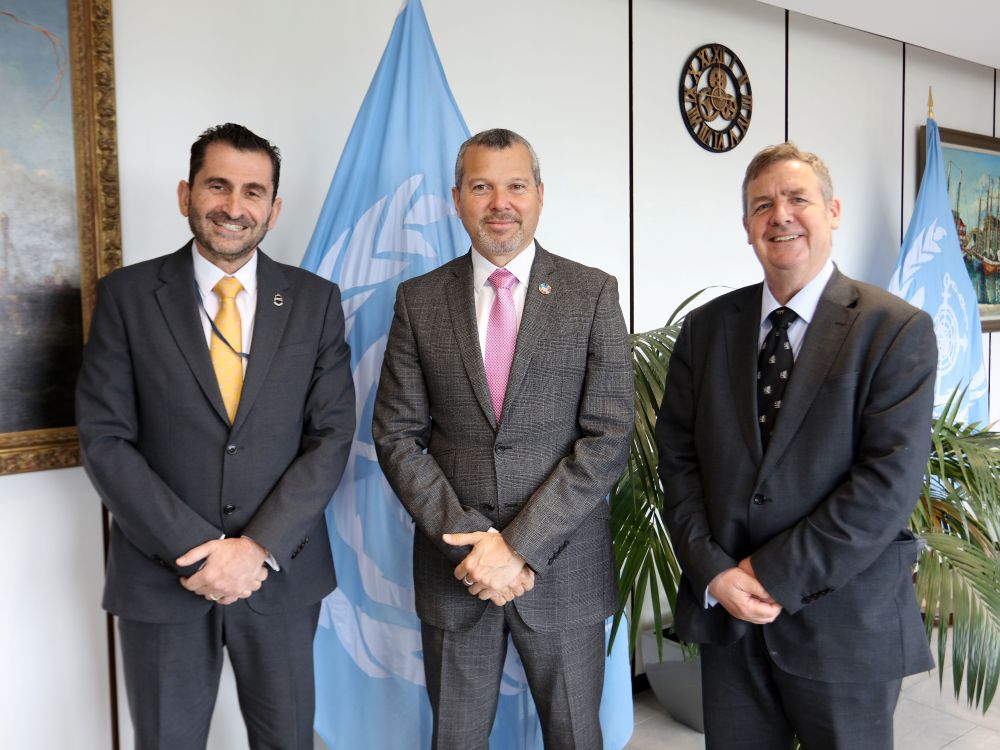
Q. ICS has supported its members through some challenging and fast-moving times in recent years. What have been some positives to come out of this period?
Guy Platten (GP): We have very much felt the meaning of the apocryphal phrase “may you live in interesting times.” When I came into post in 2018 the biggest issue was the implementation of the ballast water convention and of course Sulphur 2020. Then in 2020 COVID hit us. Everyone began looking inward and we saw this as an opportunity to show leadership and bring people together and share experience and knowledge from the other international associations.
When the crew change crisis was becoming ever more apparent we repositioned ourselves and were at the forefront of the negotiations, liaising with multiple stakeholders, our social partners, governments and UN agencies such as International Maritime Organization (IMO), International Labour Organization (ILO) and World Health Organization (WHO). We have since lobbied successfully for our seafarers to be given keyworker status with recent updates to the Maritime Labour Convention (MLC), 2006.
Regarding greenhouse gas emissions (GHG), one of the proudest moments of my tenure was in September 2021 when the ICS board agreed to a net-zero policy by 2050. To get varying views to agree to this, and ahead of regulators, was quite something. Our proactive work over many years made sure we had a seat at the table with initiatives like the proposed fund and reward levy system. If you don’t come up with the ideas in the first place, nobody else will. We need to scan the horizon, look ahead and try to be ahead of the game.
Thomas Kazakos (TK): For me, there are two key things: the resilience and importance of the ICS, and of the industry. We always bounce back and find ways to survive. Secondly, it is the importance of the people we work with and our national members. These times have proven, again and again, the importance of speaking with one voice for international shipping and the power that has. Together, we can do better.
Q. What can be done to ensure that shipping remains resilient to ongoing political volatility and the impacts to global trade and financial markets?
GP: For several years, we could see that global trade and globalisation as a whole was starting to massively come under threat. It was, in large part, a backlog of what happened during COVID, where countries began looking inward. Now, with other disruptions to global trade, we are starting to see a wholly new landscape.
At ICS, our strength is our contacts, knowledge and network. We will continue to make the case for free trade and how it helps the global community. Our role is to provide logical arguments and facts. For example, at the United States Trade Representative Section 301 Investigation public hearing, where we noted the unintended consequences of proposed fees on Chinese-operated and Chinese-built vessels.
TK: Another example is when the ICS Chairman, Mr. Emanuele Grimaldi, Guy, myself and a few other ICS colleagues, met the Transport and Commerce Ministers on a high-level delegation visit to China recently. The government, and also those from industry we met during the visit, were appreciative ICS was able to present objective facts and figures not only to the administration, but to the world too. This is what is required for free trade, for a free economy, and social stability.
GP: Our global network is our strength and resilience as an industry. It can help us through this period of turmoil.
Q. And how should shipping respond to changes being imposed by the US Administration?
GP: We must remember that America is an important trading partner, it accounts for around 12% of world trade. We will continue to work with all nations to facilitate global trade. It is important to maintain dialogues across government and industry.
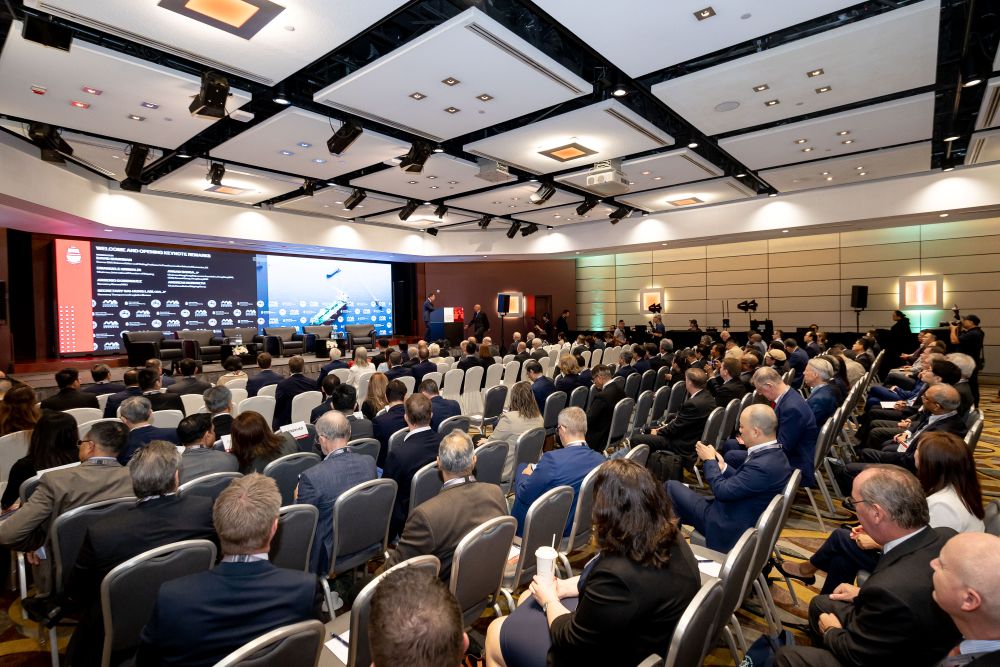
This is why we convened governments, industry, and regulators at our trade summit in Hong Kong last year, and will do the same at Our Shaping the Future of Shipping Summit in Athens in June and again in Hong Kong later in the year. The convening nature of the ICS can be such a powerful tool to bring people together and make them realise we have far more in common than we do apart – that working together is far better.
Q. In times of volatility, business leaders can become more risk averse. With upticks in dual-fuel order vessels and a turn to LNG fuel, is there a risk of industry missing its GHG targets?
GP: While GHG reduction has been a major topic in recent years, with what is happening with the world economy, leaders’ priorities will inevitably be shifting to prepare for these changes and shifts to trade patterns. But the good news is that there was an agreement reached at MEPC 83, which will hopefully be adopted in October, which provides some clarity. It then becomes an operational issue as opposed to a political one.
Q. Speaking of MEPC 83 and the establishment of the Net-Zero Framework, which the ICS has met with cautious optimism, what are the next steps for ICS and industry?
TK: We must acknowledge that this is a step in the right direction and something that has been proactively worked on by industry and the IMO for many years. It is important to stay calm and objective. We need to see a quick and clear implementation of the decision going forward and encouragement on behalf of those implementing it.
Shipowners are placing orders and building ships to accommodate the new fuels but we need more encouragement from the producers to invest. We also need financial incentives from governments, because we are talking about huge investments on behalf of shipowners.
GP: And ICS will continue to be there and provide the voice of reason, share our collective experience and knowledge to help inform these outcomes.
TK: That is the crux: Together we can do better. For example, a success story can be the CEM Hubs initiative working to de-risk investments. These sort of public-private partnerships are vital for long-term change. They are not easy but if we work together we can achieve a lot more.
Q. In times of change, focus can get lost on other vital areas. What would you like to see further progress on for maritime?
TK: One key aim is to maintain close cooperation with our ICS member associations. It is our unique strength. It is also vital in such times of change to continue to grow our interactions with stakeholders, whether that is with our round table partners, unions, governments and the media. This all feeds into the ultimate goal to ensure that shipping remains a sustainable industry for world trade and the global economy.
GP: As an ex-seafarer I am incredibly proud of the work that we have done with the The International Transport Workers’ Federation (ITF) and our social partners to ensure seafarers receive key worker status. And I have seen a visible shift since COVID in how shipowners must invest in and protect their crews. We mustn’t lose focus on our global workforce, our seafarers and their safety going forward.
I’m also passionate about diversity, particularly as my own daughter is a captain. It is a very personal thing for me, and I want to challenge discrimination and promote equality in maritime.
Related content

Cyber Security Workbook for On Board Ship Use, Eighth Edition

MEPC 85-9-2 – The emerging URN measurement problem – A proposed way forward
MEPC 85-6-3 – Implementation of the CII within the French fleet