José Alberto Carbonell: Rising to challenges and investing in the future
Port of Barcelona President José Alberto Carbonell speaks to ICS Leadership Insights about everything from minimising disruption during a nationwide power cut to plans to provide shore power to 100% of vessels at the port.
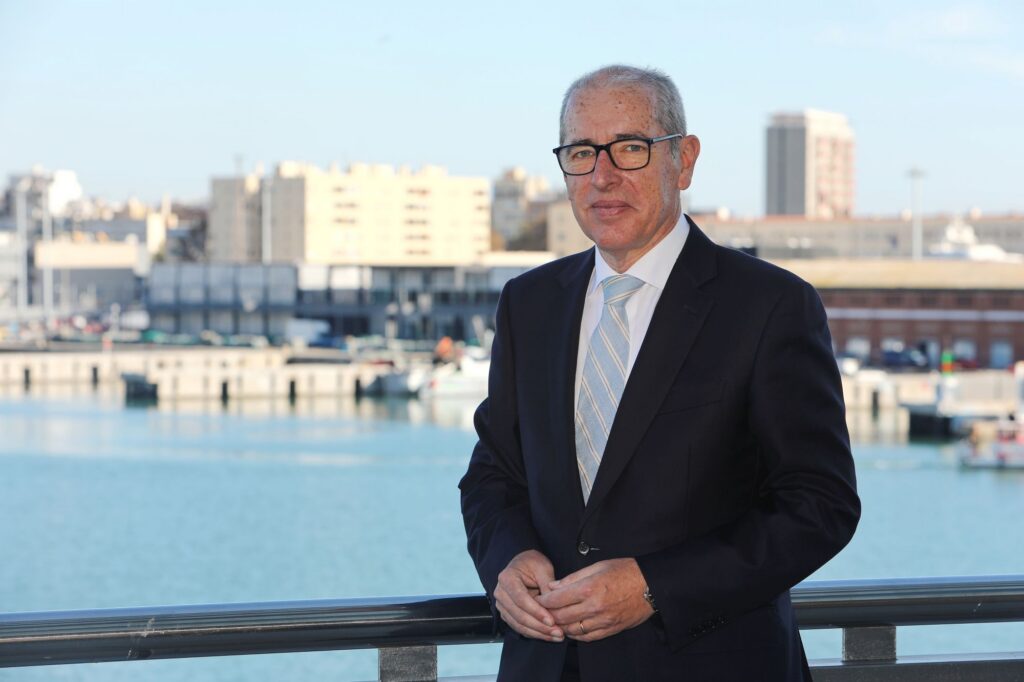
plans for the port as it adapts to a changing maritime landscape. Credit: Port of Barcelona
Q. You took up your role as president earlier in 2025, what are the key business goals for the Port of Barcelona you hope to achieve over the year ahead?
A. Our main focus is the construction of a new container terminal, during which we also plan to overcome three different challenges.
One challenge is our need to improve connectivity at the port and another is that we need to develop infrastructure while being mindful of the height of our cranes as we are based near the airport. A final challenge is creating more draught in the port basin – we currently have 16 metres and will drop this to 25 metres to facilitate the arrival of larger container ships.
Our aim is to have solved these challenges by next year in partnership with the central government.
We’re also running several decarbonisation initiatives that will prove important – the port and maritime sectors are very much aligned when it comes to goals in this area.
Q. Maritime has become used to ‘black swan’ events but the nationwide power outage in Spain in April must have been a major operational challenge. To what extent was the Port of Barcelona affected?
A. We’re still awaiting clarity on the cause of the power cut but given the challenging, unprecedented circumstances, we were pleased that our existing self-protection plan was enacted efficiently and all cruise ships were able to continue using the port without interruption.
We did face some challenges with our container terminal but this was addressed by the middle of the day of the outage. We will naturally review our contingency plan for situations such as these but we are glad our existing plan minimised disruption during unusually challenging circumstances.
Q. The Port of Barcelona, like many ports, also faces challenges securing reliable supplies of alternative fuels. Did the initial slow progress with the BarMar Hydrogen pipeline affect the port’s business outlook?
A. This project is still extremely viable – we recently had a meeting with the Executive Vice President of the European Commission who told us the EC fully backs the BarMar pipeline, which will connect Barcelona and Marseille.
This is a big European project that will also involve Portugal, Spain, France and Germany as part of a consortium that will build a pipeline from the south to the Iberian Peninsula in the north, and span from west to east as well.
I believe it remains an opportunity for the Port of Barcelona to obtain hydrogen produced in Spain and will support access to new fuels.
This will prove important when it comes to achieving our sustainability goals and delivering for the industry by providing new fuels.
Q. Alongside alternative fuels, ports are increasingly offering shore power solutions. To what extent does the Port of Barcelona provide these?
A. We believe shore power is key to reducing emissions in the port, which is why we began a project five years ago to supply all vessels docked with us with shorepower solutions. We initiated this project prior to the EC announcing regulation that would make such a move mandatory.
We’re now in the second phase of the project and buying electricity directly from Spain’s national supplier. There are huge power needs for a project of this kind, with just one cruise ship requiring between 10-12 megawatts of power – enough to power 4,000 average houses.
These cruise ships, alongside ferries, will be a clear priority given they are close to the city and there is rightly a focus on these vessels’ emissions.
We’re also well prepared when it comes to offering shore power solutions to containerships, with our project in a second phase that will last from now until 2030, after which we will extend the solution across all sectors including tankers and LNG vessels. Our aim is to provide 100% of vessels with shore power by 2050.
Clearly, getting the right infrastructure in place and the right power supply and ensuring we match this to the ships is a big challenge, but this is a pressing initiative. We can’t simply wait for renewable fuels to become more economically viable given society is increasingly aware of the need to reduce emissions.
Q. How will these shore power solutions fit within your broader sustainability efforts when it comes to offering zero- and low-carbon fuels, and which of these will the port invest in storing and distributing
A. In terms of the technological challenge, we’re confident we could offer any of the popular alternative fuels but there will of course be a question around capacity given that it won’t be sufficient to provide just the one alternative fuel.
We currently supply 1.6 million tonnes of fuel each year and work with the major shipping companies who are investing in a range of fuels – the requirements for cruise ships and ferries will be different to containers, for instance. We’ll need to be flexible to ensure we accommodate the diverse needs of shipping businesses, which will most likely mean supporting vessels opting for methanol, LNG and ammonia.
We have explored building a methanol plant in the port, with the capacity to store 100,000 tonnes of the fuel and would represent the second largest investment in our history, after the development of our container terminal.
We’ve also had some notable interest in this from major players such as Maersk so there is a clear appetite for this offering.
Q. Finally, with geopolitical challenges affecting all industries, to what extent do you anticipate tariffs introduced by the US administration – and retaliatory tariffs from other countries – will affect business at the port?
A. The world has become used to change and volatility, especially since 2020. Last year was actually the first time we’ve had to work to manage congestion in the port as a result of geopolitical events reducing access to the Red Sea.
The good news is that our industry always finds a way to rise to challenging circumstances, so while we’re yet to see the full impact of tariffs, we’re working on contingency plans that will ensure we can manage disruption.
Ultimately, it’s necessary for authorities and the port community to come together to ensure we’re prepared to respond.
Related content

Why shipping’s next 39,100 officers are already onboard

Bridging rail strategies to solve shipping’s biggest hurdles

CCC 12-3-8 – Comments on document CCC 12/3