Tolls in international waterways
The ability of merchant ships to freely navigate international waterways safely, predictably and without unnecessary impediment, including through those straits used for international navigation, is a fundamental principle of international law and underpins resilient supply chains, economic stability, and energy security. Introducing compulsory charges on shipping for transit through international straits or imposing any form of control over transit is therefore contrary to international law.
Any additional costs imposed on maritime transport inevitably flows through international supply chains. These consequences extend beyond shipping costs, contributing to higher energy prices, higher inflation, and higher economic uncertainty. Ultimately, these impacts will carry a human cost, affecting livelihoods around the world. It is vital that we continue supporting the preservation of freedom of navigation as the foundation of international maritime governance.
Tolls and/or undue control of ships in the Strait of Hormuz
Throughout the ongoing conflict in the Strait of Hormuz, there has been various proposals for the imposition of some sort of charging mechanism or means of control applicable to ships transiting the Strait of Hormuz. Such charging mechanisms have been referred to as, variously, “tolls”, “charges for services”, “compulsory insurance” and, most recently “cargo charges.”
The International Chamber of Shipping strongly holds the view (and one that has been echoed by the Secretary General of the IMO) that the principle of freedom of navigation must be upheld and that there is no legitimate basis for the imposition of either compulsory charges for transit, or any mechanism for control over ships transiting an international strait such as the Strait of Hormuz.
As discussions regarding regional security and conflict resolution take place, we must ensure that internationally recognised rights of navigation are not compromised, undermined or used as leverage as part of broader political negotiations.
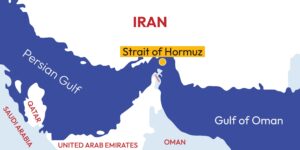
Introducing tolls or compulsory charges in the Strait of Hormuz or any method of controlling which vessels can transit would be in contravention of international law. Beyond the immediate financial implications for global trade, it would establish a precedent that could undermine the internationally recognised legal framework governing straits used for international navigation and transit passage. Once such a precedent is established, it becomes increasingly difficult to resist similar measures elsewhere, creating uncertainty for international shipping and global commerce.
We stand ready to work with the International Maritime Organization and the wider United Nations to ensure that long-established legal principles governing international straits, that are protected under international law, most notably through the United Nations Convention on the Law of the Sea (UNCLOS), are not undermined.