Are “antifragile” supply chains the future of resilience?
Leadership Insights newsletter story
Global supply chains face a huge number of challenges from natural disasters and geopolitical tensions to pandemics and economic volatility. Can a resilience-based approach still offer supply chain strategists the tools they need?
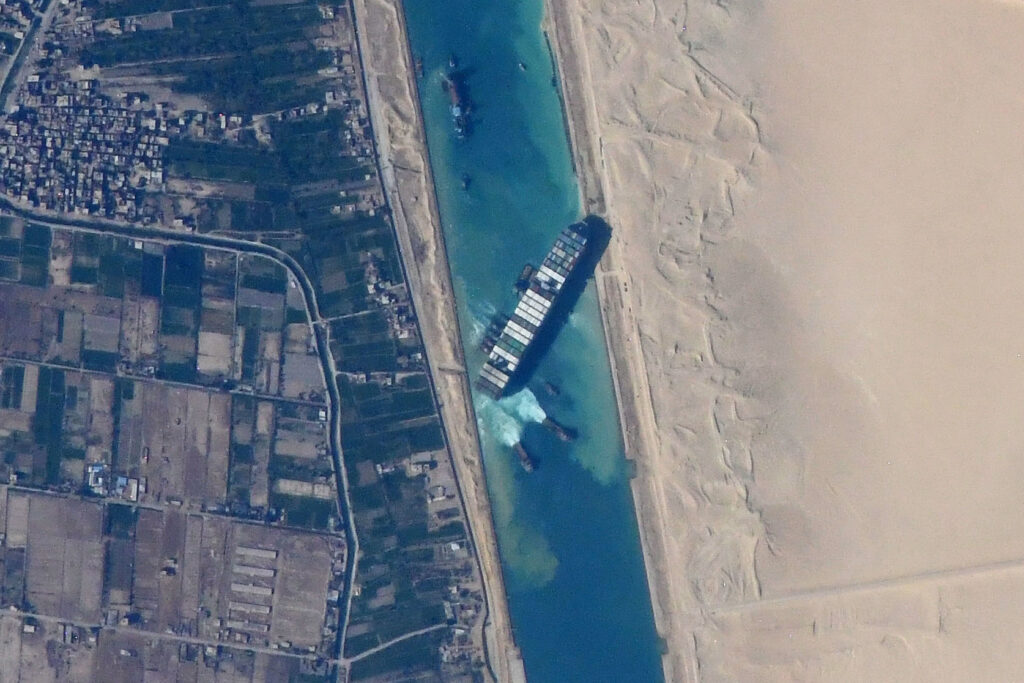
Traditional supply chain strategies have largely focused on building resilience, aiming to maintain functionality and withstand disruptions. However, resilience is just one part of modern supply chain thinking. A more transformative concept, “antifragility”, is taking resilience a step further. It promotes not only withstanding shocks but also thriving and improving because of them.
What is “antifragility”?
“Antifragility” has grown in popularity as the world has experienced increasingly volatile and uncertain economic times while simultaneously facing massive technological shifts and a rapidly changing climate. It describes systems that benefit from volatility, stress, and disorder.
Speaking to ICS Leadership Insights, Tony Lugg, Founder of supply chain technology firm Project Argus, noted that turbulence has become a hallmark feature of the contemporary global supply chain following the COVID-19 pandemic.
Unlike fragile systems, which break under stress, or resilient systems, which simply endure, antifragile systems are supposed to improve or even thrive when subjected to uncertainty and shock. They reduce reliance on single points of failure, and unlike resilient supply chains, which might focus on backups, antifragile ones are aimed to be created from networks that can quickly adapt and evolve.
Applying “antifragility”
In the aftermath of COVID-19, Amazon and Walmart both took steps to implement antifragile networks. Both effectively leveraged their digital infrastructure to scale up e-commerce operations, while manufacturers diversified their supply sources and automated parts of their production processes. These companies didn’t just survive the pandemic—they emerged more robust and better prepared for future disruptions.
According to Paul Saunders, Head of Product Strategy and Chief Evangelist Cloud ERP for German multinational software company SAP, applying an antifragility strategy starts by decentralising operations and creating redundancy across suppliers and production sites.
Speaking to ICS Leadership Insights, he said that planning, analytics, and real-time metrics all play a key role in achieving antifragility. But, he added, one of the biggest capability gaps right now is the right mindset. “Antifragility requires flexibility and experimentation,” he said. “If a company is one that loves its processes more than its outcomes, then this is not for them.”
Tim Payne, Vice President Research and Gartner Fellow at Gartner, told ICS Leadership Insights that adopting an antifragile supply chain empowers companies to make better decisions on how they can change (agility) and how quickly (responsiveness) by having “better knowledge of the impact of uncertainty in resource performance on value output”.
“It [a company utilising antifragile supply chains] gets this knowledge by balancing central and local decision making, using probabilistic planning approaches, experimentation on the supply chain (aka stress testing) using a digital model, and driving towards decision-centric planning (as opposed to process-centric planning) to leverage resource options effectively, amongst other things,” he said.
Antifragility also thrives on information and learning from stressors. Modern supply chains can achieve this by utilising real-time data analytics, machine learning, and artificial intelligence to gain insights into patterns of disruption, customer demand fluctuations, and supply chain inefficiencies. Rather than simply reacting to disruptions, an antifragile supply chain uses data to predict potential issues, explore new opportunities, and continuously optimise processes.
Another key component, according to Lugg, is that supply chain partners should not be seen through an “us versus them” lens, but instead in a collaborative environment that encourages entrepreneurial thinking.
Different points on a continuum
Zera Zheng, Global Head of Business Resilience Consulting at Maersk, does not believe that antifragility is replacing resilience. She told ICS Leadership Insights: “Resilience aims to manage vulnerabilities rather than eliminate all dependencies, which is impractical in the real world.”
Unless a company controls every aspect of its operations, she noted, from raw materials to marketing and sales, it will inevitably rely on external parties. “These partners will vary in importance, making it impossible to distribute the workload equally. As a result, certain dependencies are unavoidable,” Zheng explained.
She went on to say: “The goal of resilience is to build supply chains that balance acceptable costs with manageable risks. Unlike the concept of antifragility, which seeks to eliminate all fragility, resilience accepts that some areas may remain vulnerable, as long as they fall within an acceptable risk level and cost.
Underscoring the realities of profit-driven organisations, she pointed out that companies are more focused on achieving the highest returns “rather than striving for complete independence in the marketplace.”
Project Argus’ Lugg agreed that an antifragile model is not always suitable due to liability concerns, leading management to adopt a purely conservative approach. “These situations often arise in heavily regulated sectors, such as pharmaceuticals,” he said. “However, I would suggest that a hybrid model could be implemented if the necessary skills exist within the logistics team or if those skills can be outsourced to a 4PL service operating in this sphere.”
Saunders concluded that he did not believe this was an “either/or” scenario. He said: “There are always situations where resilience will be preferred – this may be due to cost/benefit, overall risk, the need for stability, etc.”
But, he added, the world we live in is not deterministic – the “inputs always change so the outputs change, too”.
“From a shipping perspective you can think of how the great explorers were antifragile,” Saunders said. “They were comfortable with sailing into the unknown, they repurposed resources as needed, they had multiple paths available in case one became blocked.
“A resilient explorer doesn’t make the history books. An antifragile one gets countries named after them,” he reminds readers.
Related content

Ship recycling regulation clarification will come down to the wire

Bridging rail strategies to solve shipping’s biggest hurdles

CCC 12-6-2 – Batteries – SP188 exemptions in containerized transport
