Shipping must be a collaborative enabler of global decarbonisation
Nick Potter, AET President and CEO, Clean Energy Marine Hubs Steering Committee Co-Chair and Chair of its Private Sector Group, talks about shipping’s role in future fuels discussions, trade, collaboration and the energy-maritime value chain.
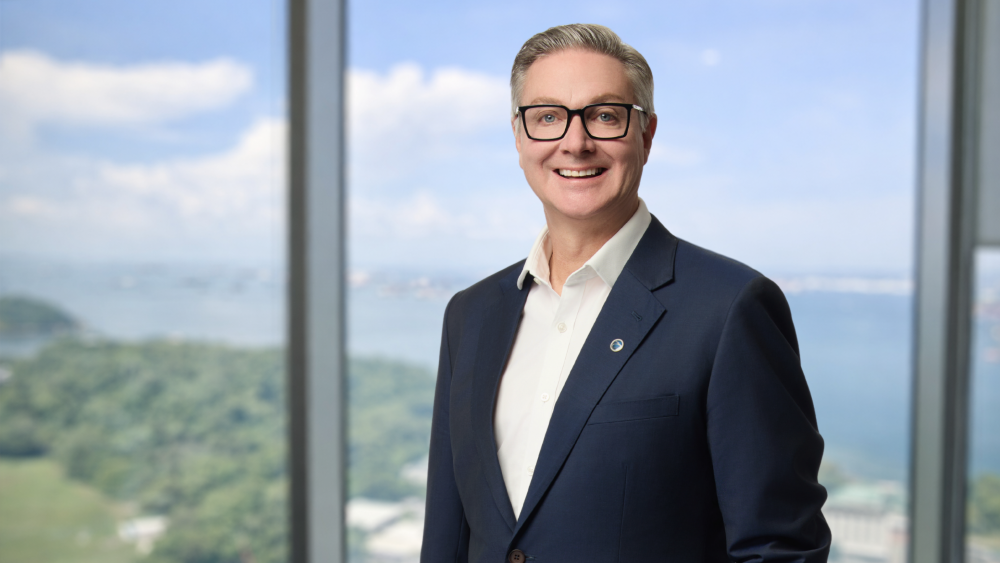
As CEO of AET and Co-Chair of the Clean Energy Marine (CEM)-Hubs Steering Committee, and Chair of the Private Sector Group, where do these roles intersect, and how does your shipowner experience shape your vision for CEM-Hubs?
They are very closely connected. At AET, we are committed to net-zero greenhouse gas emissions by 2050; investment decisions we make today will be for vessels operating well into the 2040s. We know the direction of travel, but the future fuel mix, infrastructure and customer requirements remain uncertain. We cannot wait for every answer; we must decide sensibly now while preserving optionality for the future.
My experience across energy and shipping has taught me that neither sector can solve this alone. Energy production, infrastructure, shipping and demand are connected, but too often considered separately. ICS, with the International Association of Ports and Harbors (IAPH), recognised the importance of bringing these sectors together and initiated CEM-Hubs, creating a platform for shipping to engage directly with governments and energy sector leaders on the wider energy transition.
Instead of asking what shipping needs from the energy transition, CEM-Hubs ask: what does the global energy transition need from shipping? That is an important distinction. Shipping’s role in the energy transition goes beyond reducing its own emissions. It will also play a vital role in transporting new energy and fuels around the world. Bringing the energy and maritime sectors closer together – and connecting policy ambition with commercial and operational reality – is where CEM-Hubs can make a real difference.
What is your key message to shipowners and stakeholders about why CEM-Hubs matters right now?
This is not just a shipping story. It is a trade story, and shipping has an important role to play.
The challenge goes beyond alternative marine fuel availability at specific ports to how new fuels and energy are produced, transported, stored and consumed globally – and what infrastructure will be required.
CEM-Hubs brings governments together with leaders from across the energy-maritime value chain to look at the system as a whole.
For shipowners ordering multi-decade assets before fuel pathways are clear and scaled, greater visibility around demand, infrastructure and trade flows will enable better, more responsible investment decisions. But uncertainty is no excuse for inaction. We can improve vessel efficiency, trial lower-emission fuels, develop new technologies and work with customers on commercially viable solutions today.
How would you like to see government policies evolve for countries engaging with CEM-Hubs?
Consistency and visibility are vital for long-term investments. Governments cannot remove all uncertainty, but clear policy direction, common standards and coordinated infrastructure planning can reduce fragmentation across jurisdictions and give industry greater confidence to invest.
Industry must also bring practical evidence: what makes investments viable, where infrastructure gaps exist, what customers will commit to, and lessons from deployment of new technologies and fuels.
That dialogue is important because energy security and the energy transition cannot be treated separately. Future energy systems must lower emissions while remaining reliable, affordable, and accessible. Governments and industry have different but complementary roles to play. We need to bring policy, infrastructure and investment decisions together to turn ambition into projects that work. CEM-Hubs gives both sides a way to identify the barriers to investment and work through them together.
How does CEM-Hubs’ public-private framework help de-risk expensive, non-commercially viable zero-emission fuel infrastructure?
It tackles the classic chicken-and-egg problem: producers wait for demand, while shipowners wait for fuel and infrastructure. By bringing energy producers, ports, shipping, and customers into one conversation, CEM-Hubs can help break that deadlock. Its Global Blueprint provides governments with practical guidance on demand, governance, infrastructure, and investment requirements. The value will be in using that work to identify where viable projects can get started
But ultimately it comes back to commercial reality. At AET we know technology cannot be developed in isolation before searching for a customer. We need to understand where our customers are in their own transition, what they need from us and where we can develop solutions together.
I think the same principle applies more broadly. Technology, infrastructure, demand and investment need to develop together. CEM-Hubs bring those conversations together earlier, so that viable projects have a better chance of getting off the ground and reaching scale.
Are there specific examples the shipping sector should study as a blueprint for success?
I am not sure there is a single blueprint that applies everywhere, but successful projects do share key traits.
One is bringing producers, ports, shipping and end-users into the conversation early. Another is building infrastructure around real, multi-user/sector demand rather than relying on a single fuel, customer or trade.
And a third is designing for change. Nobody can say with certainty today exactly what the global fuel mix will look like in 2040. Infrastructure and vessels need a degree of optionality, where technically and commercially sensible.
The development of LNG as a global commodity offers a useful lesson in coordination: production, shipping, terminal infrastructure, standards and commercial arrangements had to develop together over time. Tools such as IAPH’s Port Readiness Level for Marine Fuels offer ports a shared framework for assessing their readiness to bunker new fuels.
What single global change, beyond IMO regulations, would most accelerate the maritime energy transition?
Greater confidence in long-term demand for lower-emission energy. The ultimate hurdle is whether producers, infrastructure providers, shipowners and customers have enough confidence in future demand to commit capital at scale.
Regulation can help but cannot create that confidence on its own; we need greater alignment across the value chain.
At AET, we know we cannot wait for perfect certainty; I see standing still as the greater risk. So, we continue to invest across different pathways – LNG and ammonia dual-fuel vessels, hybrid-electric technology, lower-emission fuel trials and improving the efficiency of our existing fleet.
We remain disciplined, however, about where and how we invest, and work closely with customers to understand where new solutions can create real value.
I want CEM-Hubs to help move us from discussion to delivery – identifying promising hubs and trade corridors where governments and industry can work together to turn good ideas into commercially viable projects.
The energy transition won’t be linear, and we won’t have all the answers at once. But by bringing the right people together, focusing on what we can influence today and maintaining the optionality to adapt as we learn more, we can make meaningful progress.


