Gu Jinshan: Shaping port strategy to be smarter and greener
As the Chairman of Shanghai International Port (Group) and President of the China Ports and Harbours Association, Gu Jinshan is leading Shanghai Port through a period of record-breaking growth, smart innovation, and pioneering green initiatives. He shares how the world’s busiest container port is shaping the future of global shipping.
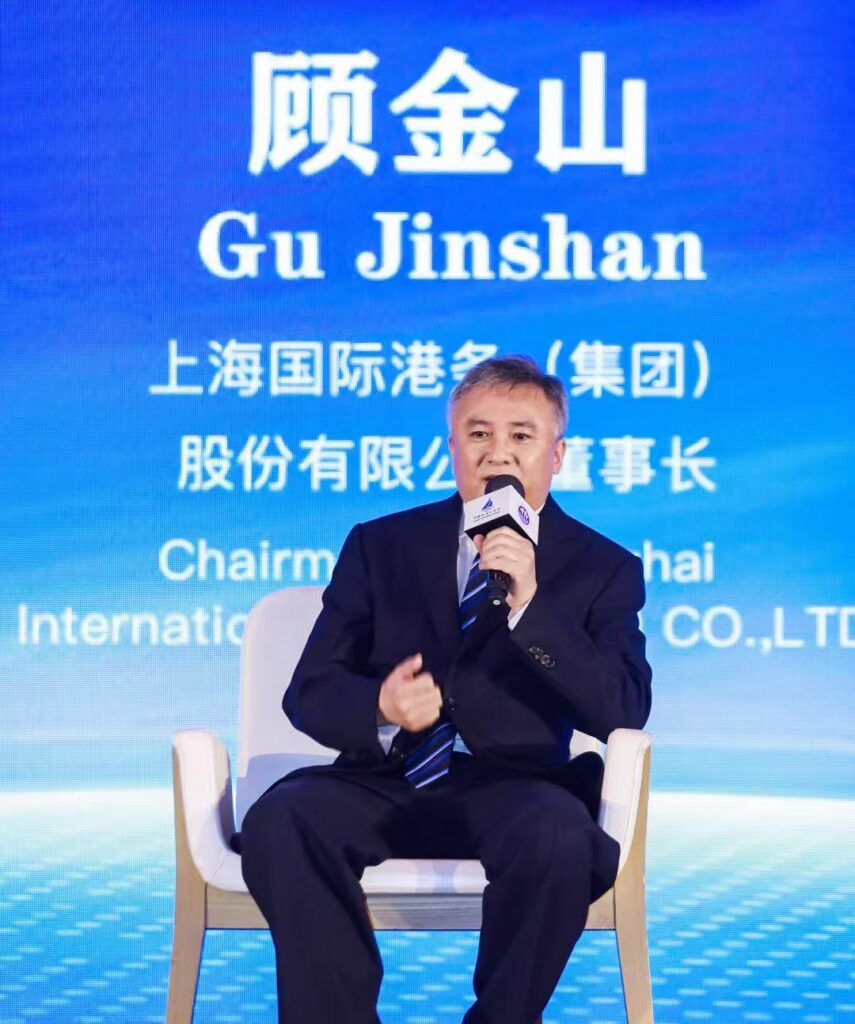
Ports and Harbours Association, Gu Jinshan is leading Shanghai Port through a period of record-breaking growth. Credit: Shanghai International Port
Q. What key milestones and developments stand out to you during your time at Shanghai International Port so far?
A. Since the launch of China’s 14th Five-Year Plan for Economic and Social Development (2021-2025), Shanghai Port Group has entered a critical phase of development, achieving remarkable growth. Our container throughput ranked first globally for a record-breaking 15th consecutive year in 2024, surpassing 50m TEU.
Efficiency remains the hallmark of our core operations. We’ve topped the World Bank’s Container Port Performance Index for two years running, driven by major investments in digitalisation and smart infrastructure. Globally, Shanghai Port leads with the highest port connectivity index and operates over 320 international routes weekly, linking more than 700 ports.
In sustainable development, we were the first in China to complete bonded ship-to-ship bunkering for LNG and green methanol, placing us among the global top three for bonded LNG volumes. Our financial performance has also been robust, with shareholder net assets exceeding RMB 100 bn (US$ 13.7 bn) and profits surpassing RMB 10 bn (US$1.37 bn) annually for three years.
Q. How has Shanghai Port embraced smart technology to develop services?
A. We’ve made significant advances in automation and intelligence. Yangshan Phase IV Automated Terminal became the first in China to have dual five-star ‘Smart’ and ‘Green’ certifications. We’ve pioneered ultra-remote intelligent command, Mobility-as-a-Service (MaaS) platforms, and blockchain for document management.
Looking ahead, we’re upgrading existing terminals with new automation technologies, deploying digital twins for real-time scheduling optimisation, and enhancing intelligent management systems.
Q. How is China responding to the global issue of port congestion?
A. Port congestion has become a recurring issue across Asia in recent years. Rising global demand and disruptions like the Red Sea crisis have strained operations. We’ve responded by expanding capacity and deploying intelligent systems to build resilience.
We launched the Shanghai Port Integrated Transport Hub and Empty Container Dispatching Centre to streamline operations and absorb volume surges. Critically, we believe success lies in proactive management – expanding infrastructure while using digital tools for predictive, adaptive governance.
Q. What investments have been made in infrastructure and alternative fuels?
A. We’ve achieved full shore power coverage across our container terminals, reducing berth emissions and cutting carbon emissions per TEU by nearly 24% since 2020.
In alternative fuels, Shanghai Port now offers both LNG and green methanol ship-to-ship bunkering. LNG deliveries rose 75% year-on-year in 2024, reaching 462,000 cubic metres. Green methanol bunkering is now fully operational, with over 10,000 tonnes supplied so far.
To secure supply chains, we’re building a green methanol resource pool, including a 100,000-tonneper-year production project, which is set to launch by the end of 2025.
Q. What are your future plans to further green operations?
A. By 2030, alternative fuel bunkering is projected to exceed one million tonnes annually. We aim to expand LNG and methanol services while exploring ammonia, hydrogen, and biofuels.
We’re also building a full alternative fuel supply chain in collaboration with the shipping, energy, and chemical industries, strengthening initiatives like green shipping corridors and forging new international partnerships for sustainable maritime growth.
Q. How important is collaboration to the green transition, and what partnerships are underway?
A. Multi-stakeholder collaboration is essential. Governments must set clear alternative fuel standards and incentivise adoption, working alongside the International Maritime Organization (IMO). Ports need to work closely with fuel suppliers to invest in infrastructure, while shipping companies must align procurement with supply strategies.
At Shanghai Port, we’re leading by example: signing MOUs with shipping giants like Maersk and COSCO Shipping for green fuel bunkering, and partnering with energy producers to develop upstream supply chains.
Q. How has Shanghai Port’s success influenced port development elsewhere in China?
A. Our recent experiences have shown that automated terminals not only reduce labour costs but, more importantly, bring about significant improvements in operational efficiency. Our success with automation and intelligent port operations has demonstrated significant gains in efficiency and competitiveness, influencing development strategies at other ports.
Yangshan’s top global ranking in the World Bank’s 2024 CPPI highlighted the benefits of self-developed intelligent control systems. Meanwhile, our green initiatives reinforce the need for ports to invest heavily in sustainable infrastructure and services.
Additionally, by expanding multimodal transport systems, such as sea-rail intermodality, we’ve shown how integrated logistics can lower costs, boost inland connectivity, and ensure long-term competitiveness. Successfully balancing smart, green, and connected development is now essential for the port industry’s future.
Related content

Biofouling, Biosecurity and Hull Cleaning, Third Edition

MEPC 85-4-9 – Comments on document MEPC 8543 concerning calibration and accuracy checks of BWMS components that take measurements
MEPC 85-6-11 – CII reference line adjustments to focus on ships’ fuel consumption while under way