Preventing the Smuggling of Illegal Narcotics by Sea
Commercial shipping can unwittingly play a significant part in the transportation of illicit drugs to the places where they are consumed.
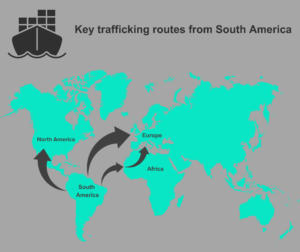
The United Nations Office on Drugs and Crime (UNODC) has established that most global cocaine trade occurs via sea, with shipowners and crews often unknowingly involved in smuggling. The United Nations Office on Drugs and Crime has also found that the majority of global cocaine production occurs in Latin America, namely in Colombia, Peru and Bolivia. The primary flow of the drug is from these producing countries to other countries in the Americas, West Africa such as Nigeria, and Western and Central Europe including the Netherlands, France, and Spain. Accordingly, ports across Latin America are of the highest risk for the smuggling of cocaine onboard ships.
ICS Guidance
ICS already has comprehensive guidance for shipowners and other actors in the maritime transport chain to prevent the smuggling of illegal narcotics by sea contained in our publication “Drug Trafficking and Drug Abuse on Board Ship”.
We have reached out to P&I Club correspondents at high-risk loading ports and high-risk discharging ports for guidance on preventing illegal narcotics smuggling by sea.
To see guidance specified to each, click the buttons below.
Please click here for a disclaimer on the guidance provided.