Wind Assisted Propulsion Webinar – 29 September 2026
On the 29th of September 2026, the International Chamber of Shipping hosted a webinar discussing Wind Assisted Propulsion as a pathway to greener shipping. As the maritime industry considers all the options available in its drive towards sustainability, wind-assisted propulsion has been gaining traction as a viable, scalable option. Our panel discussed this alternative fuel and provided their own examples of how wind power is already being implemented upon ships globally.
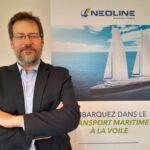
Our panel was made up of Head of WindWings at BAR Technologies Lauren Eatwell, Lead Naval Architect, Wind Powered Ships at RISE Research Institutes of Sweden Frederik Gerhardt, Specialist of the Ship Technical Unit at Mitsui O.S.K, Lines (MOL), Japan Changbae Jin, Technical Director of ICS Chris Waddington, and President of Neoline, France Jean Zanuttini. ICS’ Principal Marine Director, John Stawpert, moderated the webinar.
The discussion kicked off with Chris Waddington, who provided an overview of Wind Assisted Propulsion and how it is already working in practice. He recounted the history of Wind Assisted Propulsion (WAP) with examples of the proven concepts, starting with The Flettner rotor ship Buckau in 1925, then the Shin Aitoku Maru in 1980, Usuki Pioneer in 1985, and Ashington in 1987. Whilst Wind Assisted Propulsion had already been proven by these early examples, there has been a steep change from 2013 onwards as, since then, over 100 ships have had WAPs installed. It was at this point the International Maritime Organization (IMO) began to introduce regulations to support a greater uptake of energy efficiency technologies.
WAPs are a relatively low-risk technology compared to other decarbonisation options, posing as a safe alternative to those who wish to move towards green shipping. To supplement the existing WAP class rules, the industry expects to see new IMO safety guidelines for Wind Assisted Propulsion be approved in 2029.
With Chris establishing where Wind Assisted Propulsion currently sits, the discussion turned to Frederik who gave a presentation about the work that RISE, Research Institutes of Sweden, are doing to accelerate our knowledge about this alternative technology. He explained that they carry out independent assessments, supporting the design, testing models, and further research. There has already been a remarkable number of ships adopting Wind Assisted Propulsion worldwide, and the rate of uptake is accelerating. This is now resulting in a shift in R&D trends. With Frederik highlighting the importance of focusing research on crew training, stating that Wind Assisted Propulsion is “useless” if the crew aren’t adequately trained. An example provided was crew familiarisation with a simulator of a Very Large Crude Carrier (VLCC) with wing sails. As he finished his presentation, he emphasized that Wind Assisted Propulsion must be optimised to fit with the existing ship systems.
The second presentation was given by Changbae from MOL. He was asked to give some insights from his real-world experience of installing Wind Assisted Propulsion on a Liquefied Natural Gas (LNG) carrier, the ‘Wind Challenger.’ He provided an overview of how this evolved from a concept to a commercial application, with 2013 marking the start of the on-shore testing. It wasn’t until 2022 where the first commercial application happened, with the Shofu-Maru. Two years later, in 2024, we saw the second installation, and in 2026 the installation of Two Wind Challenger sails on a 174,000 m3 LNG carrier, representing the first multi-sail application, and marking a positive step for this technology. Changbae ensured to also highlight an important challenge which emerges here – how do we quantify the actual fuel saving benefit when operating conditions are continuously changing? MOL have, therefore, developed a methodology, supported by independent third-party verification, to help provide a transparent and robust way to evaluate the fuel saving and show the technology is credible, and financeable. This methodology has been applied to their own ships which each have projected savings, of up to 12% on a 2-sail LNG carrier, and up to 30% for a 4-sail LNG carrier. He closed off his presentation with a key takeaway: Wind Assisted Propulsion is no longer just a future concept, it is a practical decarbonisation solution for commercial shipping.
The next speaker was Lauren Eatwell. As a technology provider, she spoke about her experience at WindWings from a range of implementations and operator experiences. She talked about the design of their wing sail, comparing it to an aeroplane wing sat on its side. This wing allows air to flow through slots, reducing the risk of stall and maximising performance. When designing their system, they analyse thousands of routes with real weather data to generate a performance profile for a real-world application. The technology was then designed in response to this performance profile so that it was robust enough for the actual real-world environment. It was first installed in 2023, with 2026 now seeing 9 vessels with 23 wing sails. She shared that the organisation is aiming to build credibility for Wind Assisted Propulsion in the market, not just for their ship, but for the entire sector. Ports have already shown more acceptance to Wind Assisted Propulsion and are embracing it as a green technology. She outlined how owners should ensure a sound basis for investment. This should include ensuring vessel specific simulation by modelling the ship, route, and operating profile.
The final presentation was from Jean at Neoline. He has been implementing Wind Assisted Propulsion on a cargo ship and shared his experience in doing so. He looked at decarbonisation through a mix of energy efficiency measures, including Wind Assisted Propulsion making up about 60% of this mix. This was alongside slow steaming operations and auxiliary energy optimisation. He spoke about the introduction of the Neoliner 136m roro ship, built in 2025, with a capacity of 400 cars. This pilot project demonstrated an 80%-90% fuel consumption reduction, with a goal of reaching zero emissions.
After these presentations concluded, the webinar progressed to the Q&A section. The first question was posed to Lauren and Jean, asking about potential issues with bridge stability, night vision, and directional stability in installations, and how owners and suppliers can overcome these concerns. Lauren shared that in her experience this is looked at very closely in the simulations, whilst Jean spoke more broadly that it is all considered for new designs so that it doesn’t become a future issue. He stated that the biggest issue for the Neoliner has been the mounting of navigation lights on rotating masts, whilst also maintaining correct alignment of the coloured light sectors relative to the hull. But overall, he believes Wind Assisted Propulsion is a very safe option for green shipping.
The safety issue was also explored in a later question about sailing through storms and extreme weather conditions. Jean emphasised that with the appropriate system settings, the ship will be fine sailing through high winds, however, it can potentially cause structural fatigue. Therefore, it is very important that the crew are trained to monitor this. Lauren echoed this viewpoint, stating how crucial it is for the crew to be trained to have confidence when managing these systems.
There was a separate question surrounding the crew training requirements, which Frederik was able to provide some insight on. He re-iterated that the bridge crew need to be brought in early on the projects, with demonstrations on the simulator. This way, you can get their feedback and ensure they are highly involved in the design process, so they are already familiar with the system when installation begins.
Finally, Changbae answered a question asking how efficiency can be maximised with the use of this technology. He states that the key factor is the real-time measurement of the wind environment around the sails. The entry of the wind can be affected by factors such as the hull and the interaction between the rotor sails, so accurate sensing and measurement is very important to maximise the aerodynamic benefit. He also highlighted that advanced weather routing is key for optimisation, as considering these weather conditions will affect how you operate the ship and will allow you to make better use of the available wind energy.
As the webinar drew to a close, John asked our panel to give their key takeaways from the discussion. Lauren pointed out that Wind Assisted Propulsion makes you more resilient and reduces fuel burn, so regardless of where the industry goes next, Wind Assisted Propulsion is a safe step to reduce your carbon emissions. Jean re-iterated that Wind Assisted Propulsion is booming and a good way to move towards greener shipping. Changbae emphasized that it is no longer a concept and is already applied to real vessels. He illustrated that successful implementation requires safe and practical integration, and that transparency around fuel savings will become increasingly important. Frederik stated that there is no “magic bullet” which will solve the carbon problem. You need to choose and combine solutions, which is where Wind Assisted Propulsion can become a powerful option. These solutions must be combined holistically with the crew brought in during the early stages of projects. Finally, Chris stated that ship owners need as many decarbonisation options as possible, and WAPSs rightly have their place in the mix. We can see that the sector is on the cusp of rapid growth and the hoped for adoption of the IMO’s mid and long-term GHG measures later this year will add an additional incentive to use the technology. Overall, the future is looking very optimistic for WAPs.
Panellists

Lauren Eatwell
Head of WindWings, BAR Technologies, United Kingdom
Frederik Gerhardt
Lead Naval Architect, RISE Research Institutes of Sweden
Changbae Jin
Specialist, Ship Technical Unit, Mitsui OSK Lines (MOL), Japan
Chris Waddington
Technical Director at ICS